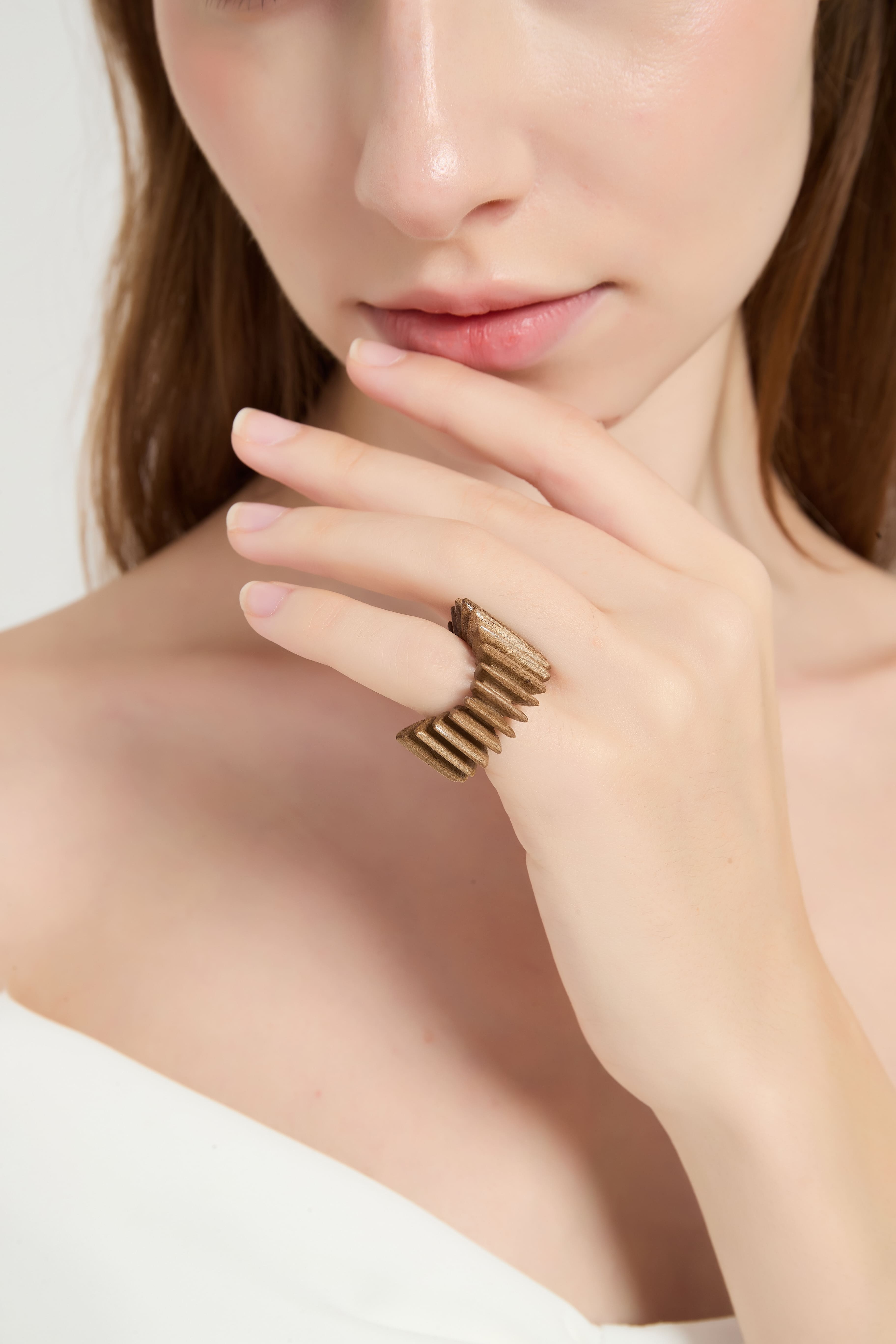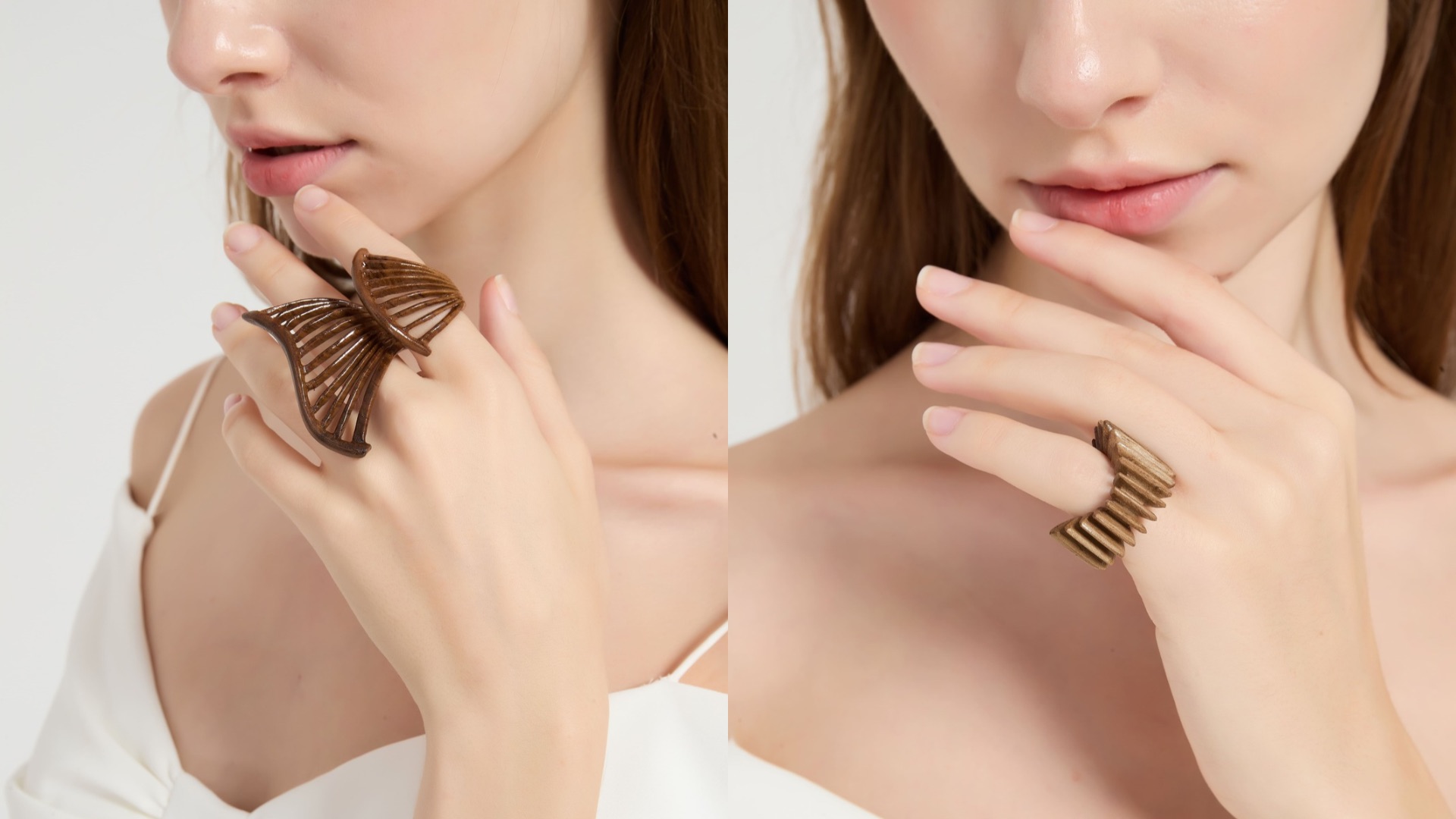
In jewellery designer Tongtong Yang’s new collection Belonging, the relationship between the morphological transformations of wood and its intrinsic continuity serves as the starting point for her exploration of female identity and life experiences. Through repetition, openwork, layering, and the interplay of light and shadow, she crafts a visual effect that gives this steadfast natural material lightness and spatial depth. The pieces retain the warm, organic texture of the materials while, through the reorganisation of their structure, revealing an aesthetic tension that bridges the gap between natural form and human-made order.
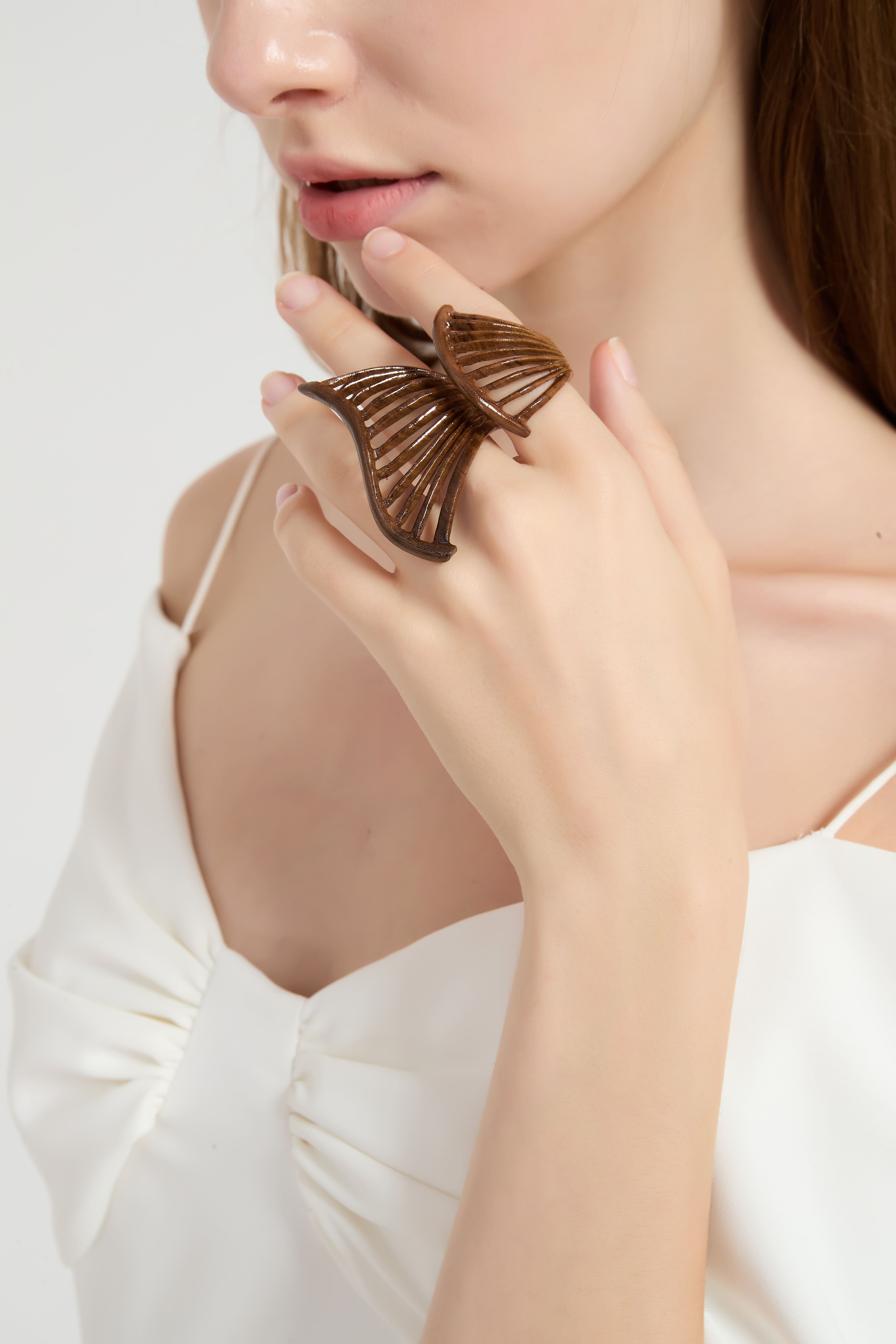
Wood is a key material Tongtong Yang continues to explore in her design practice. In her previous series, Rooted, Yet Flowing, she transformed wood's inherent resilience into soft, flowing curves through hand-carving, sanding, and shaping, exploring the multifaceted qualities of strength and softness that coexist within women. In her new design series, Belonging, she has extended her research from the material itself to the relationship between space and the body. The growth rings, grain, and natural growth marks of wood record a temporal process that cannot be replicated. Yang sees in these changes a similarity to the life experiences of women.
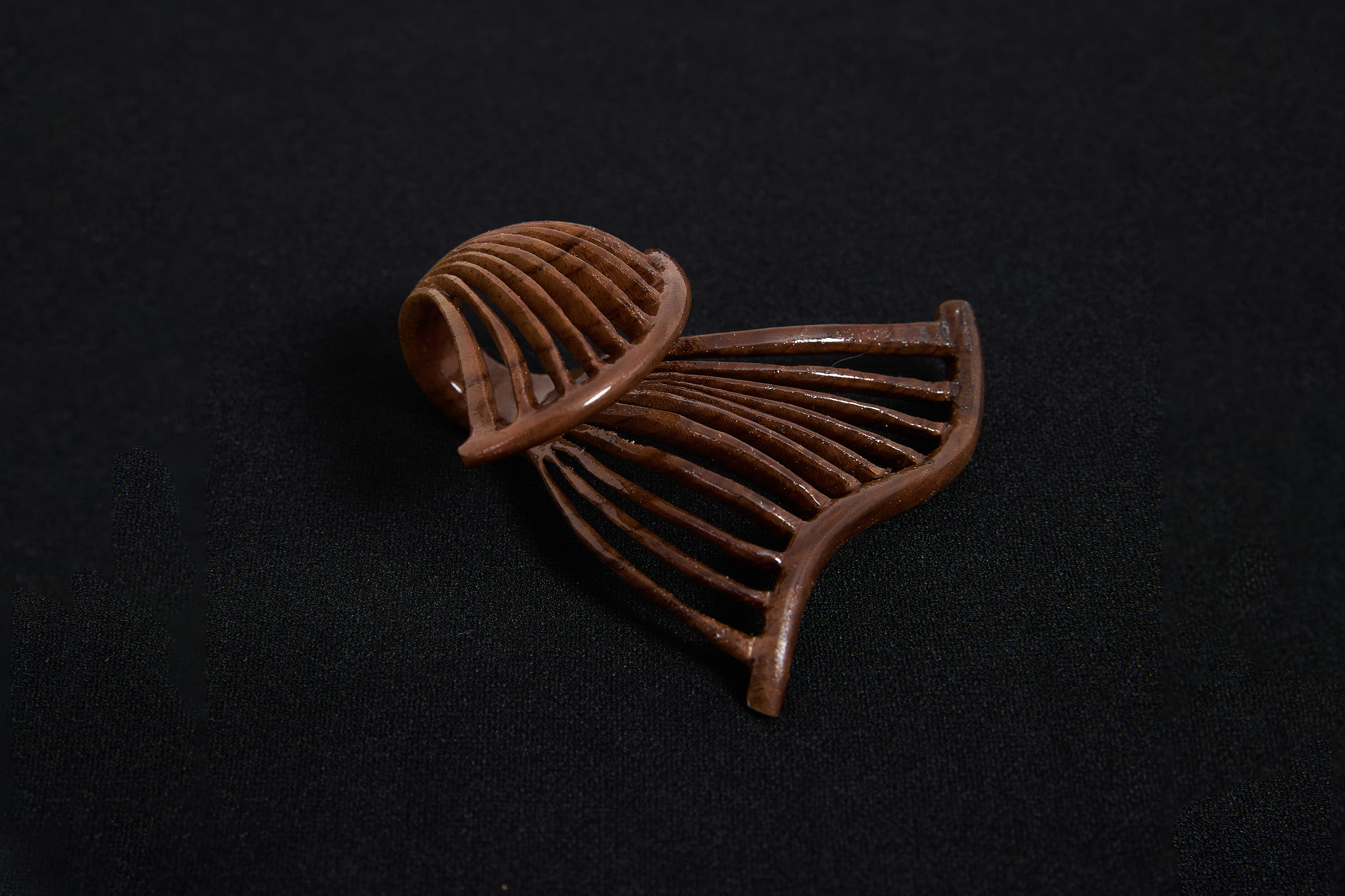
In formal language, Yang has transformed architectural photographer Nina Papiorek’s observations on spatial order, repetitive structures and the interplay of light and shadow into visual references for her jewellery design. She has extracted the structural logic from these observations, incorporating repetitive geometric relationships, layered openwork spaces and the way light penetrates into the composition of the wooden beads. This translation from architectural space to the human scale allows the pieces to exhibit a unique structural beauty. In the details of the design, the spacing and connections between different elements create a visual order that is both continuous and rhythmic. The use of openwork structures in this collection is particularly ingenious. It allows light to pass through the jewellery itself, casting shadows on the skin of the wearer that shift with every angle and movement. This joint organisation of solid and void spaces allows Yang’s designs to transcend the traditional focus on decorative surfaces in jewellery, turning towards exploring the potential of jewellery as a micro-spatial structure.
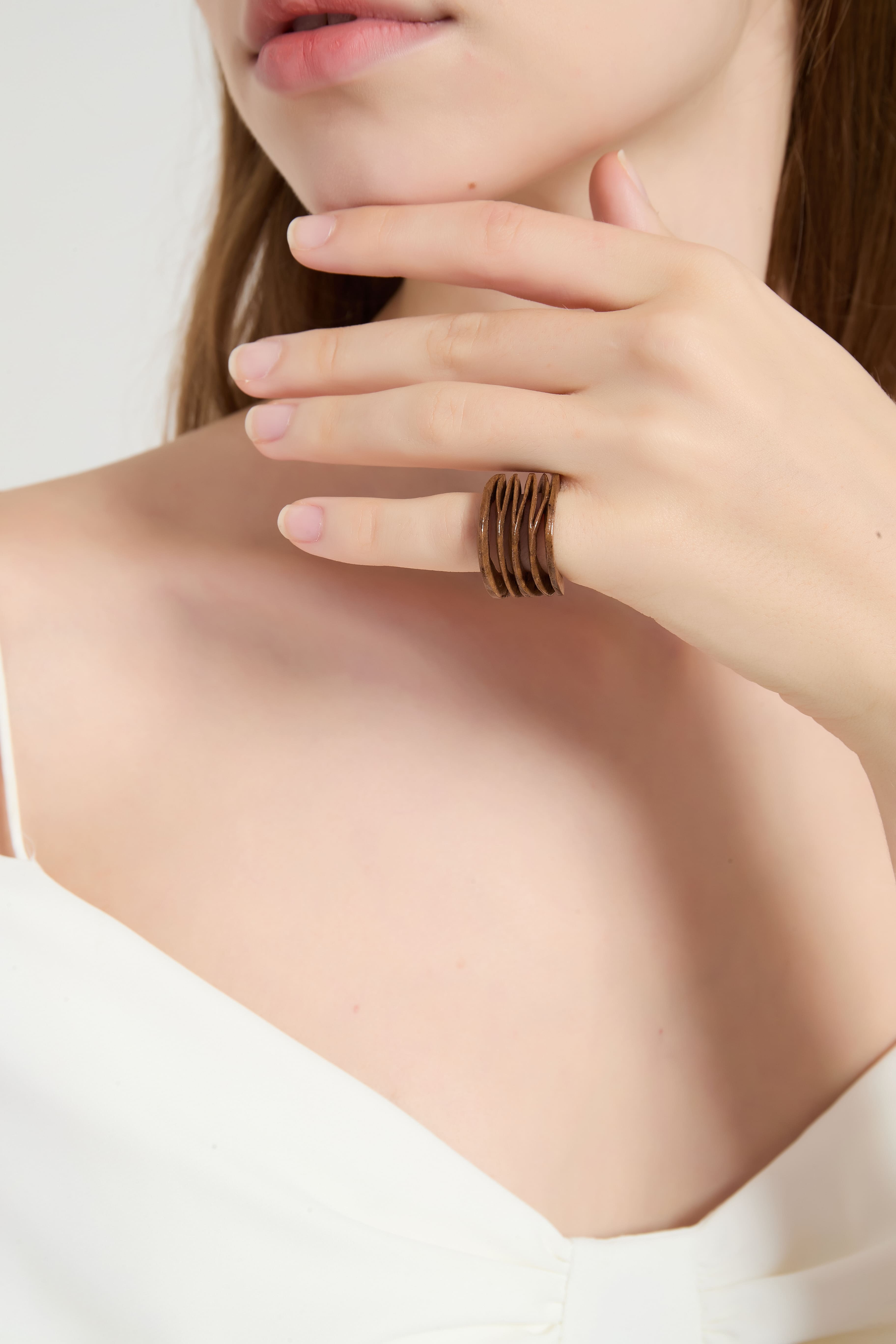
This design approach also brings to mind architect Louis Kahn’s understanding of space and light. In architecture, the way light engages with a space determines its perception and experience. Belonging translates this concept to the intimate scale of jewellery worn close to the body. Wood forms the structure, with openwork creating spaces, and light gives these spaces their dynamism. The piece becomes a design that requires the joint participation of the body and the environment to be fully realised. The wearer’s movements change the direction of the light and alter the visual form of the piece against the skin, making every occasion of wearing it a unique experience of space.
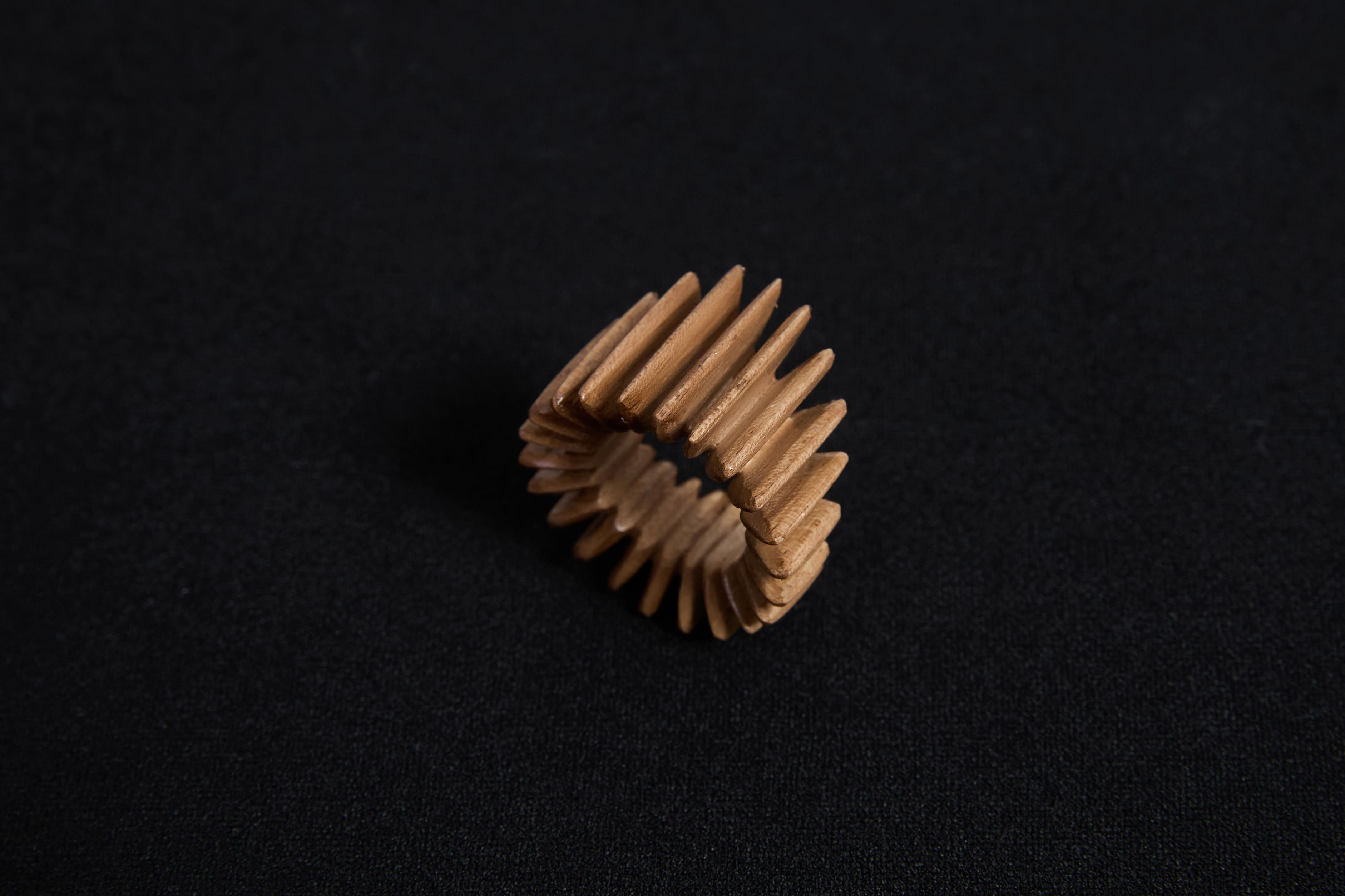
Yang’s understanding of the relationship between jewellery and the body also gives this series a sense of everyday life that transcends static display. She intends for her pieces to take on new meaning through the wearer’s breathing, movements and life experiences. When the wooden beads touch the skin, and when light passes through the structure to cast shadows upon the body, the jewellery becomes part of the bodily experience. It also leaves room for the wearer’s personal interpretation and emotional projection. This ability to transform concepts into bodily experiences is a defining characteristic of Yang’s design practice.