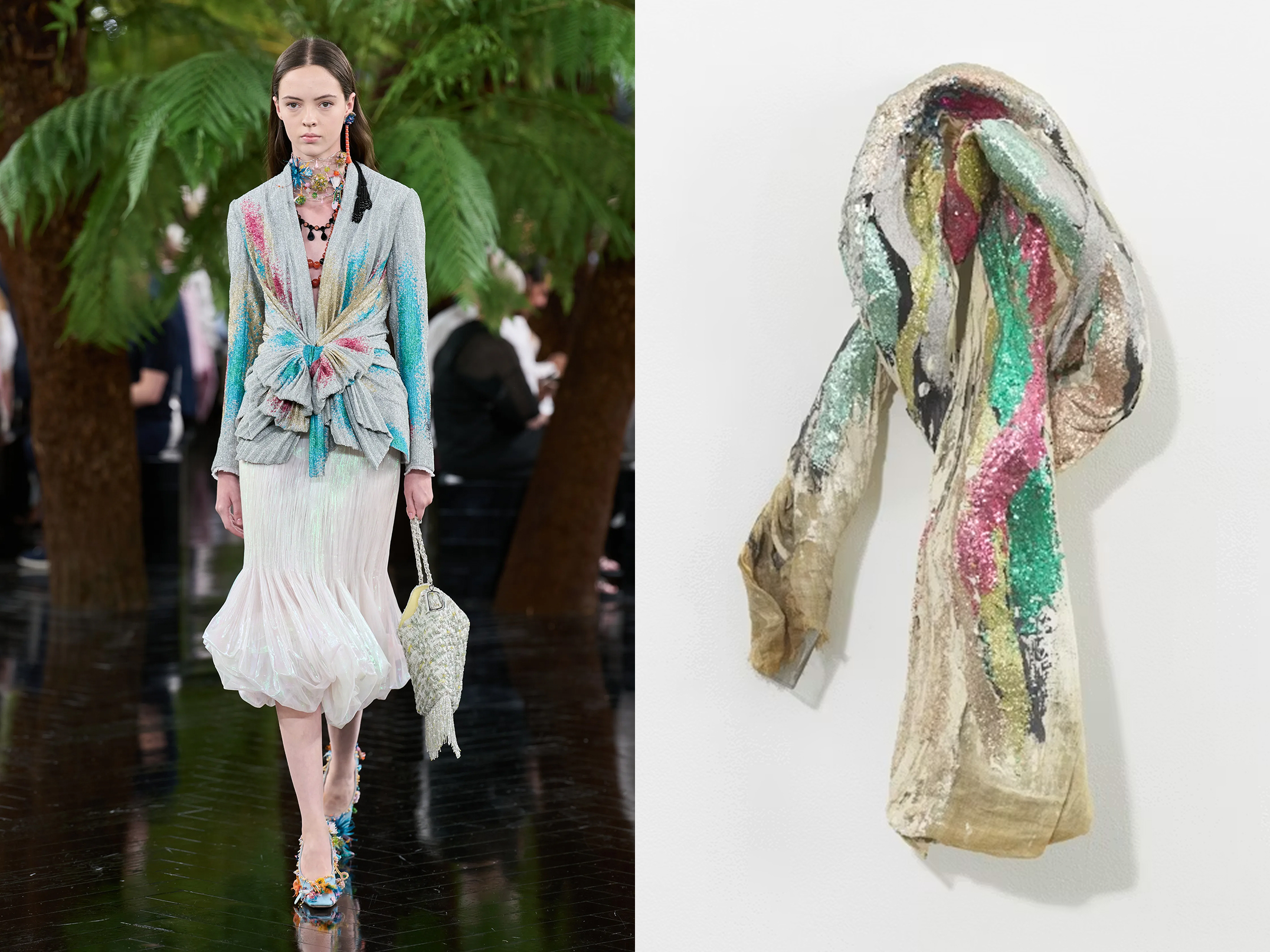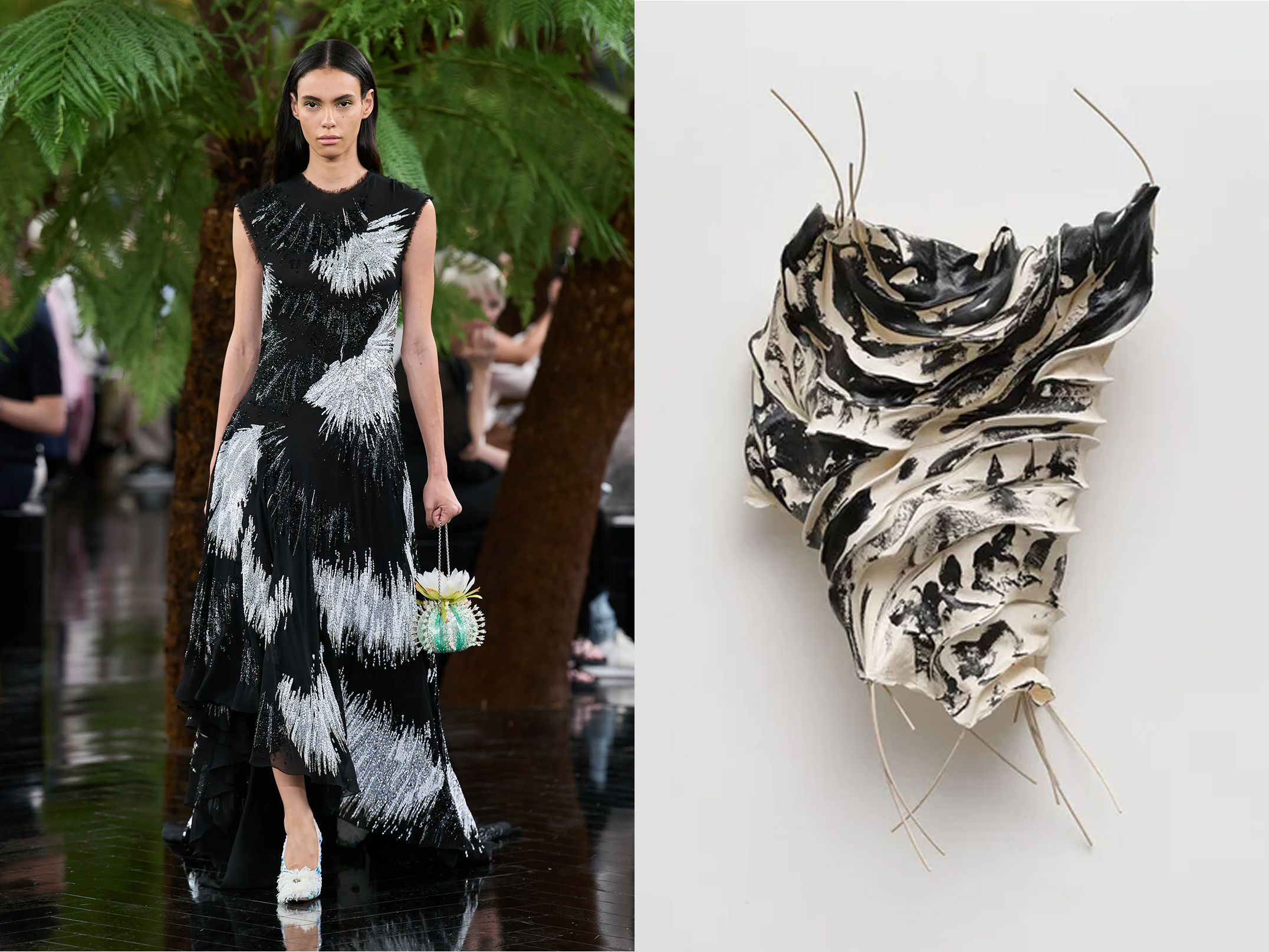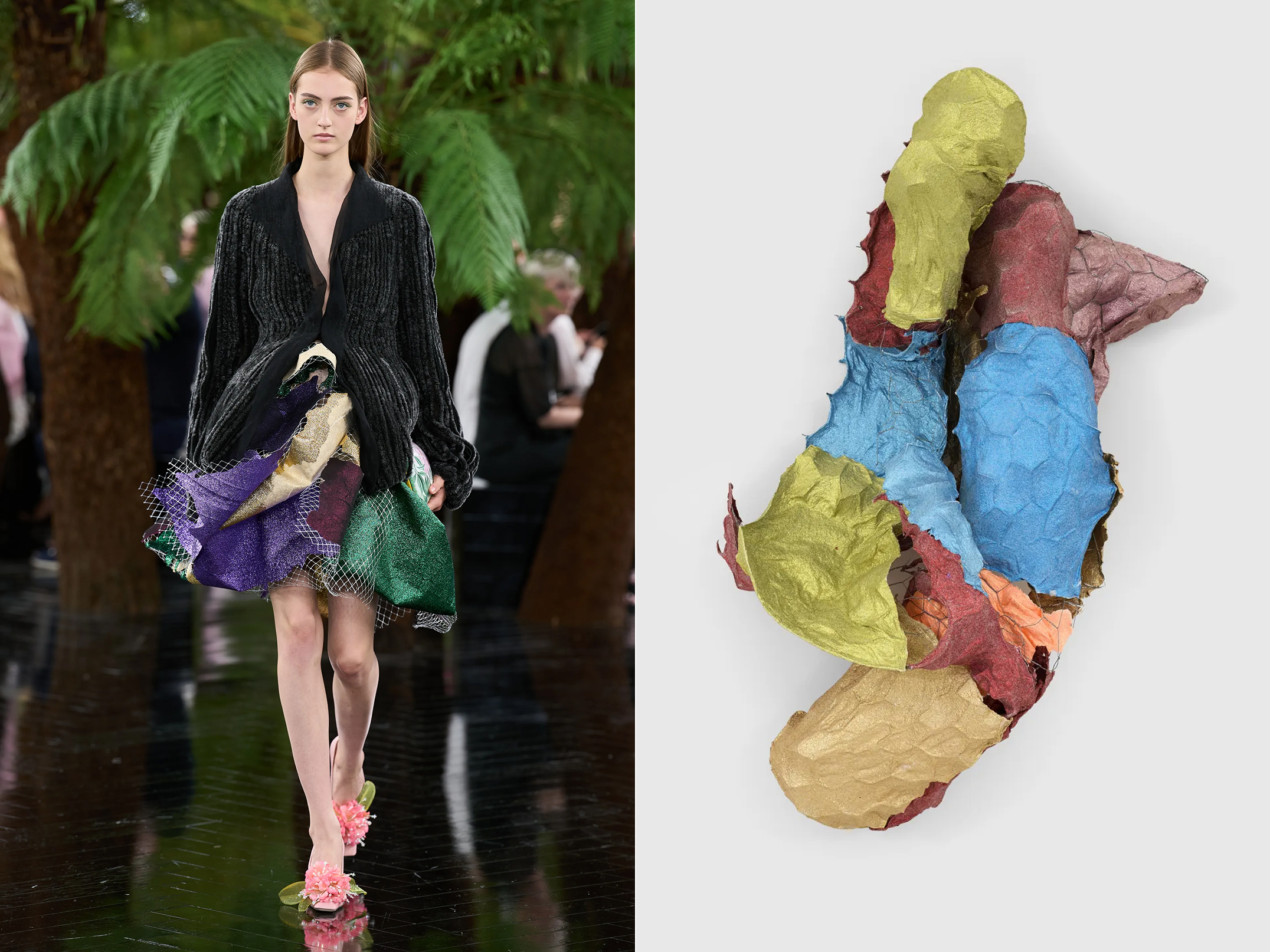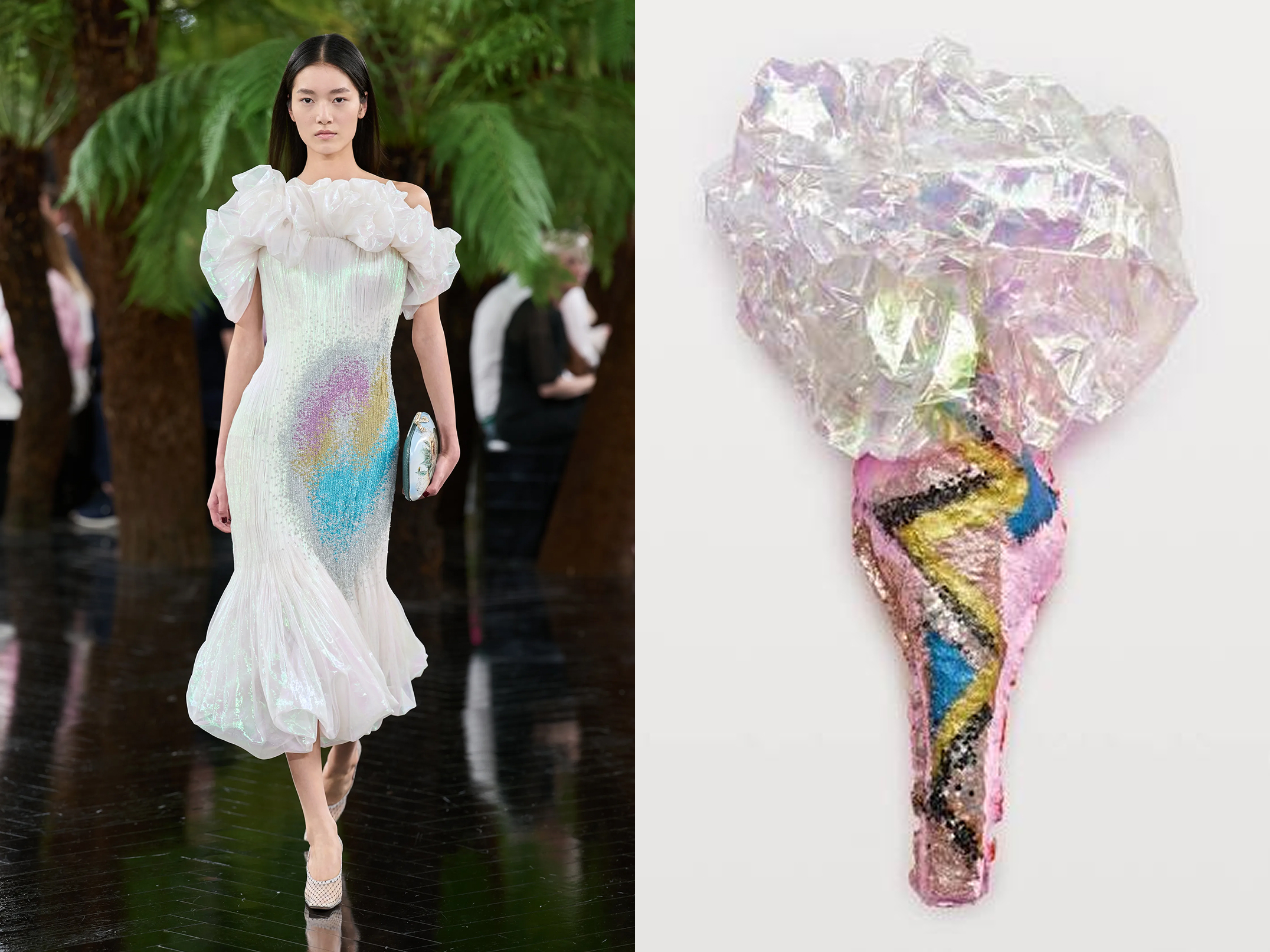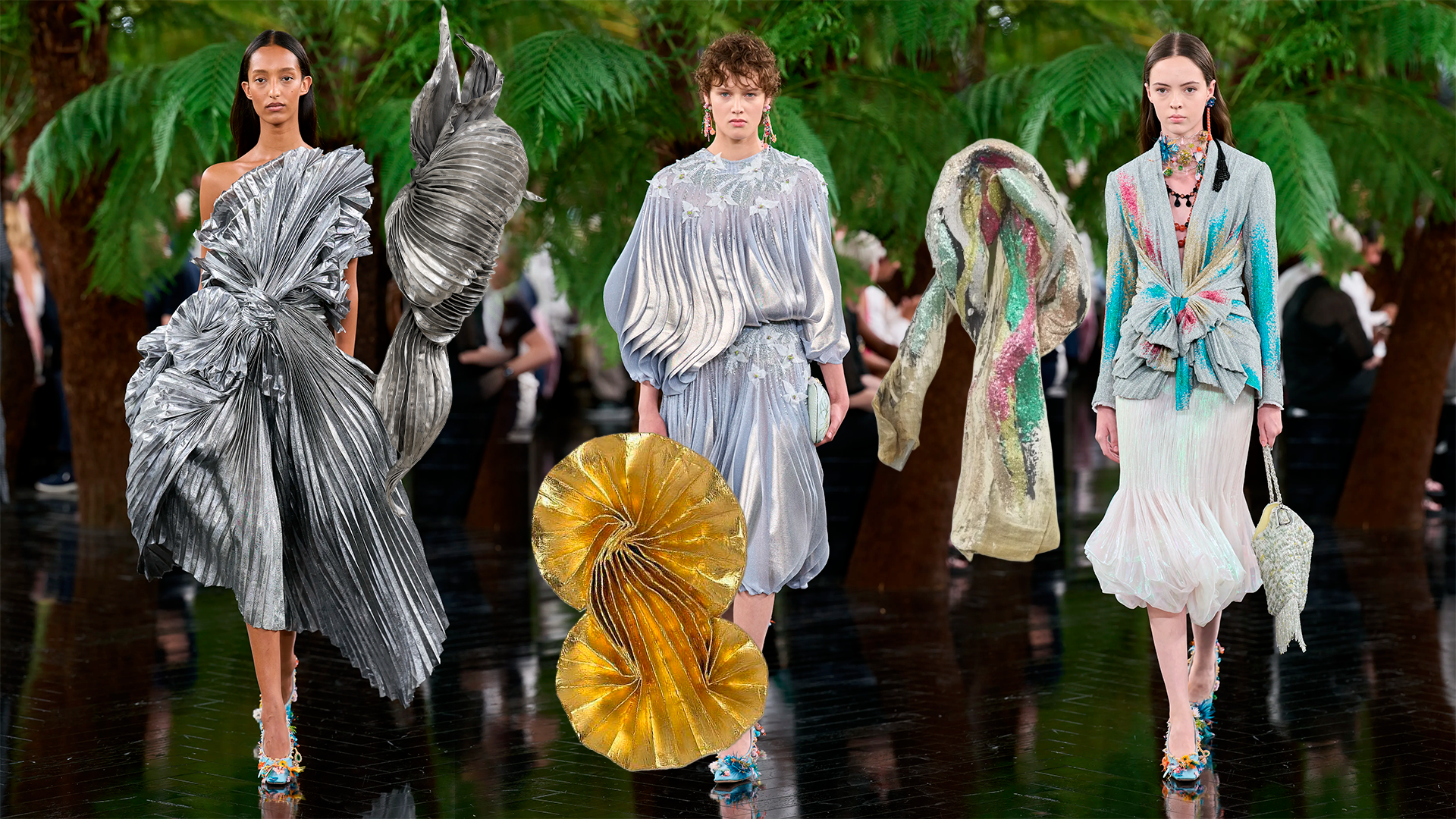
For his second Haute Couture collection at Dior, Jonathan Anderson didn't just reference an artist — he tried to translate one, garment by garment.
Shown July 7 at the Musée Rodin during Paris Haute Couture Week, Dior's Fall/Winter 2026-27 collection is built as a direct response to American sculptor Lynda Benglis, whose five-decade career has been spent turning flat, unruly materials — latex, wax, metal, paper, mesh — into three-dimensional form through knotting, pleating, and molding. As Dior put it in the show's own notes: "The art of couture enacts a similar shift: fabric is given sculptural form, accentuated when worn." It's a tidy piece of theory, and Anderson spent the entire collection testing whether it holds up on a body in motion.
Where the sculptures became clothes
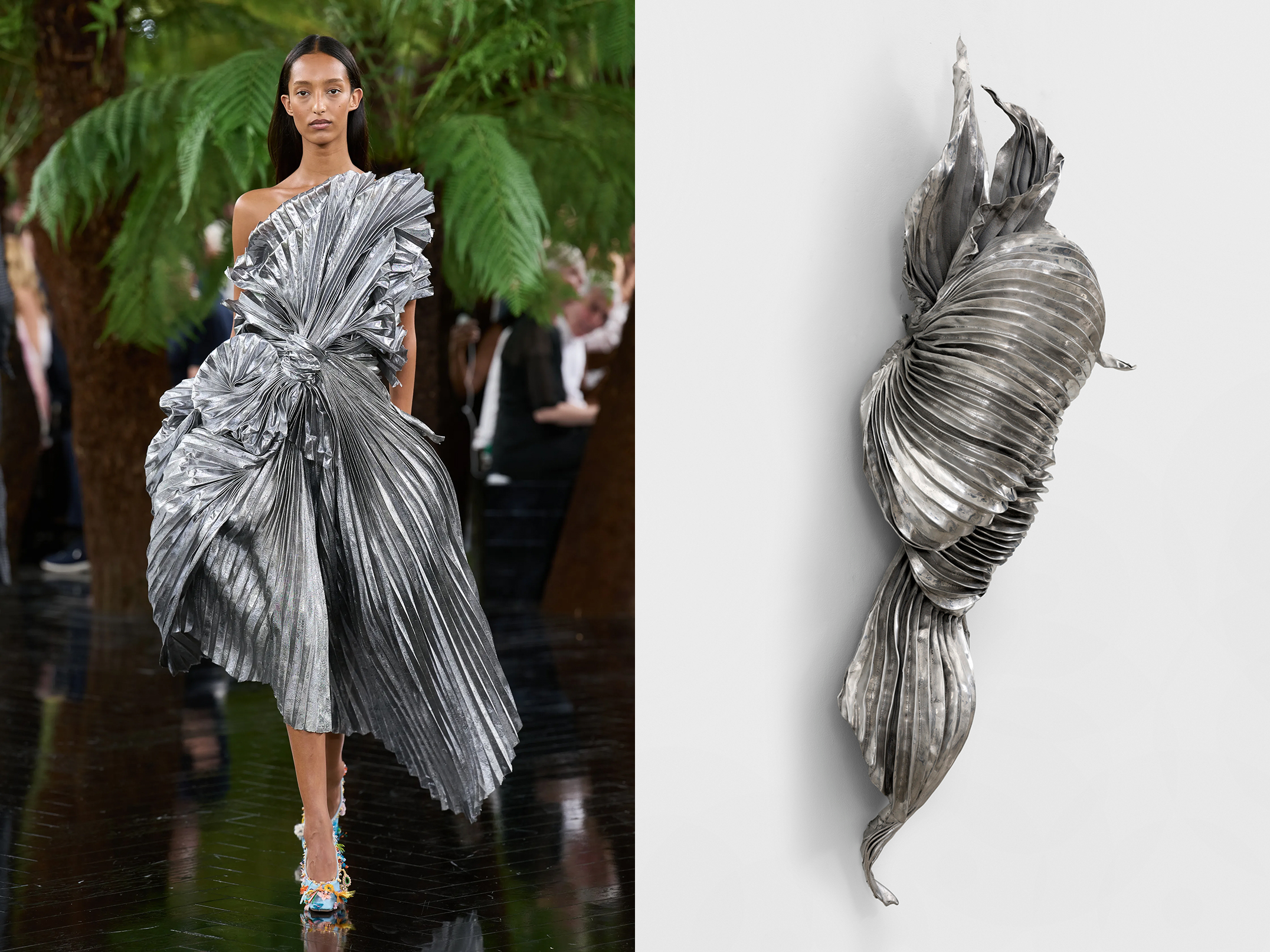
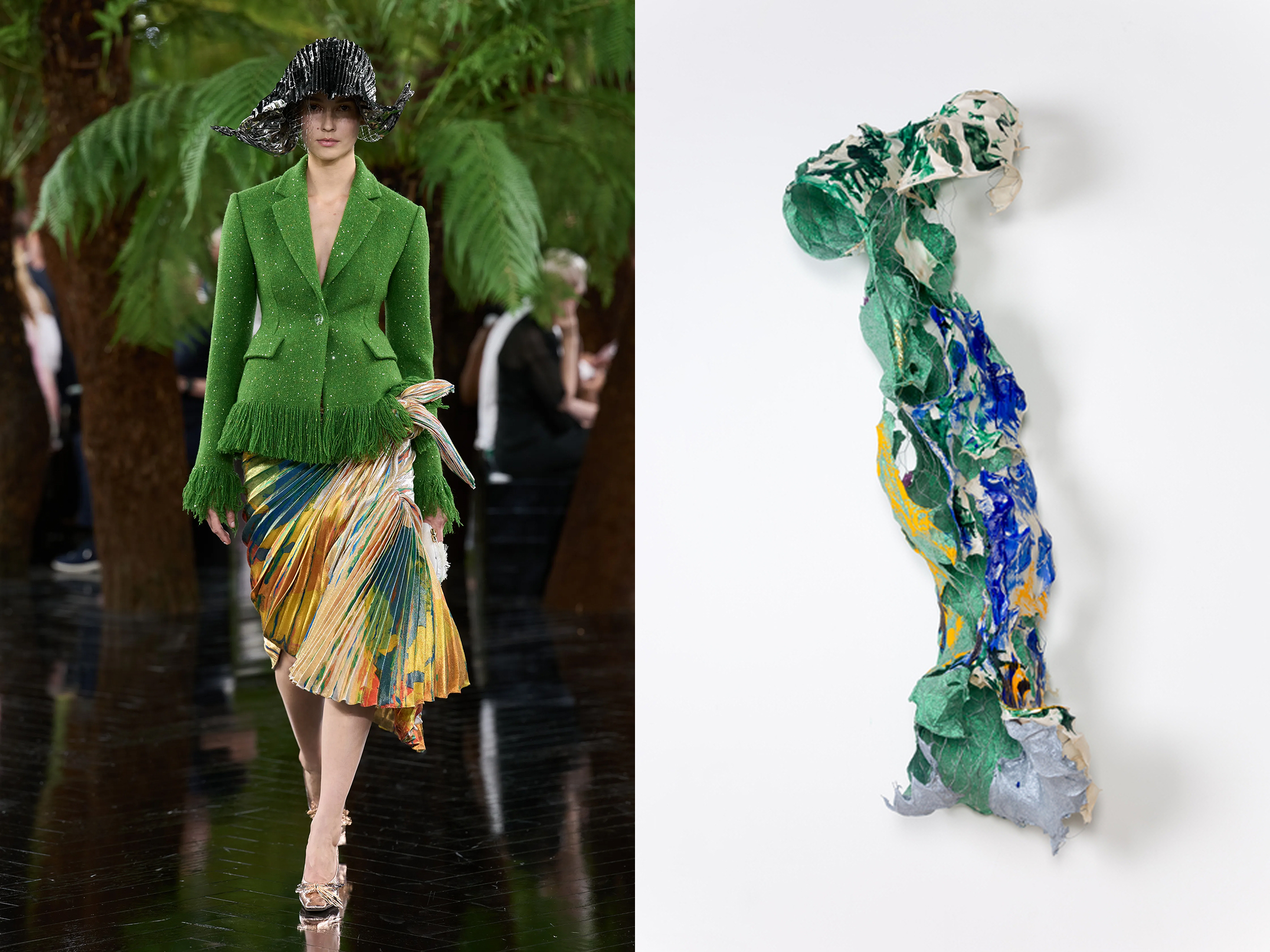
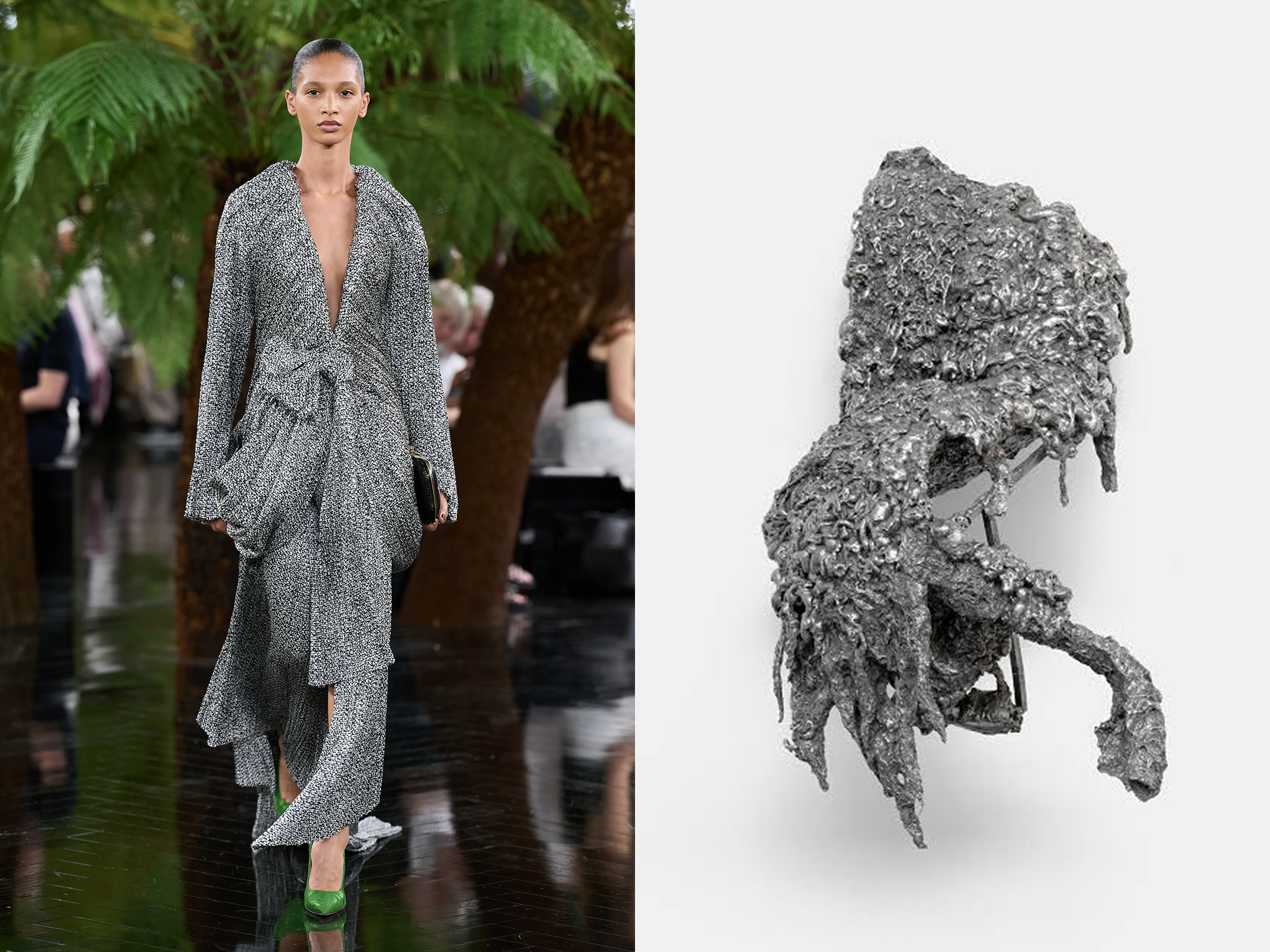
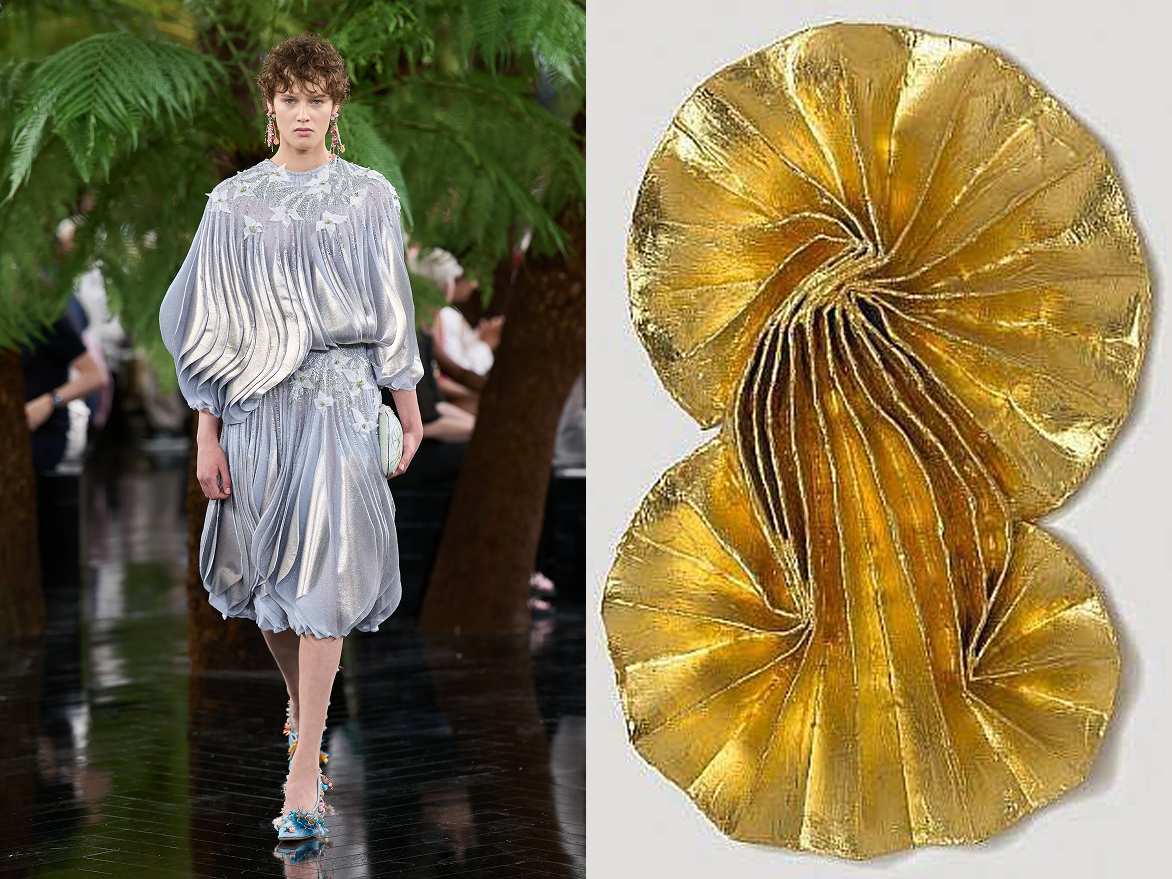
The opening look set the terms immediately: a gold pleated hat, formed into a helmet-like silhouette, borrowed directly from the abstract, free-flowing logic of Benglis's sculptural work. From there, the translations got progressively more specific. A hand-pleated silver lamé dress, draped and knotted into an off-kilter bow, recalls Benglis's 1989 piece "Toyopet Crown," made from stainless steel mesh and aluminum. A strapless cocktail dress in pale gray metallic satin was engineered to resemble hammered silver. Two gowns in molten, undulating plissé reworked her "Pleated" series (1980s-90s), in which she spray-cast fluid metal pleats into hard form — while her "Sparkle Knots," shimmering paper stretched over chicken wire, resurfaced as netted, sculptural skirts, the industrial mesh reimagined in soft silver netting.
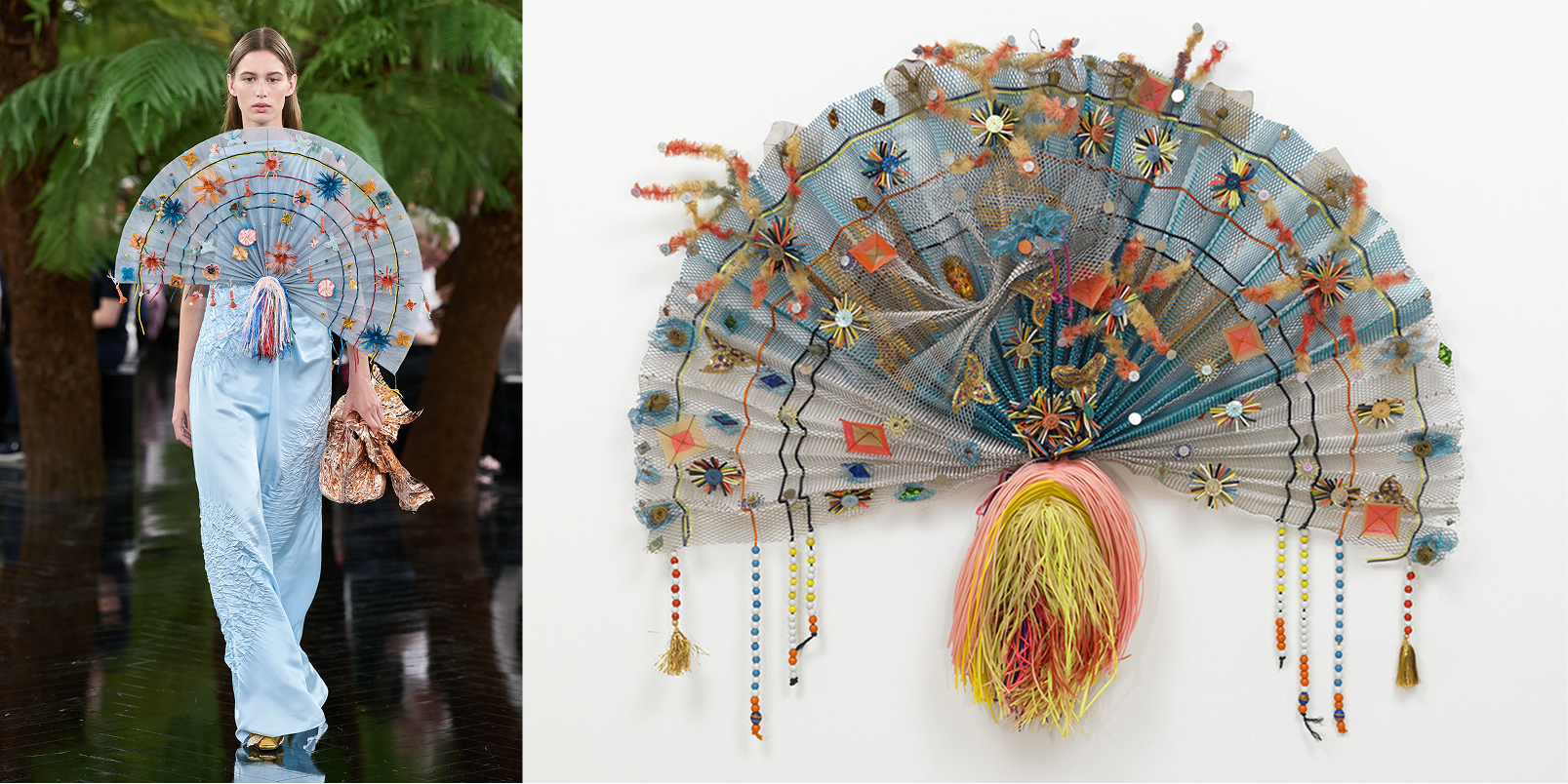
The most literal translation in the show, though — and the one getting the most attention — is the pairing tied to Benglis's "Zanzidae, From the Peacock Series" (1979). Benglis began the Peacock series while staying on the Sarabhai family estate in Ahmedabad, Gujarat, drawing on the plumage of the birds she observed there; the sculptures are built from wire mesh, enamel, glass, and plastic, layered with appliqué flowers, feathers, and beadwork. Looks 24 and 30 of the Dior collection — large fan-shaped forms spread across the chest of a crumpled silk dress, or jutting from the waist like a surreal crinoline bustle — are, per ARTnews, "almost a one-to-one translation" of that original work.