There’s a graduate collection that recently caught my eye. It’s by Reuben Lodge, who recently graduated from the Womenswear Fashion Design course at Central Saint Martins (CSM). I followed his IG when I first saw his ‘Look 1’, and when the ‘Nautilus Shell Dress’ was revealed, I knew I had to ask him for an interview. By the time I saw the ‘Crystal Therapy Dress’, I was eager to hear the story behind his work.
Could you briefly introduce yourself and share your background with us?
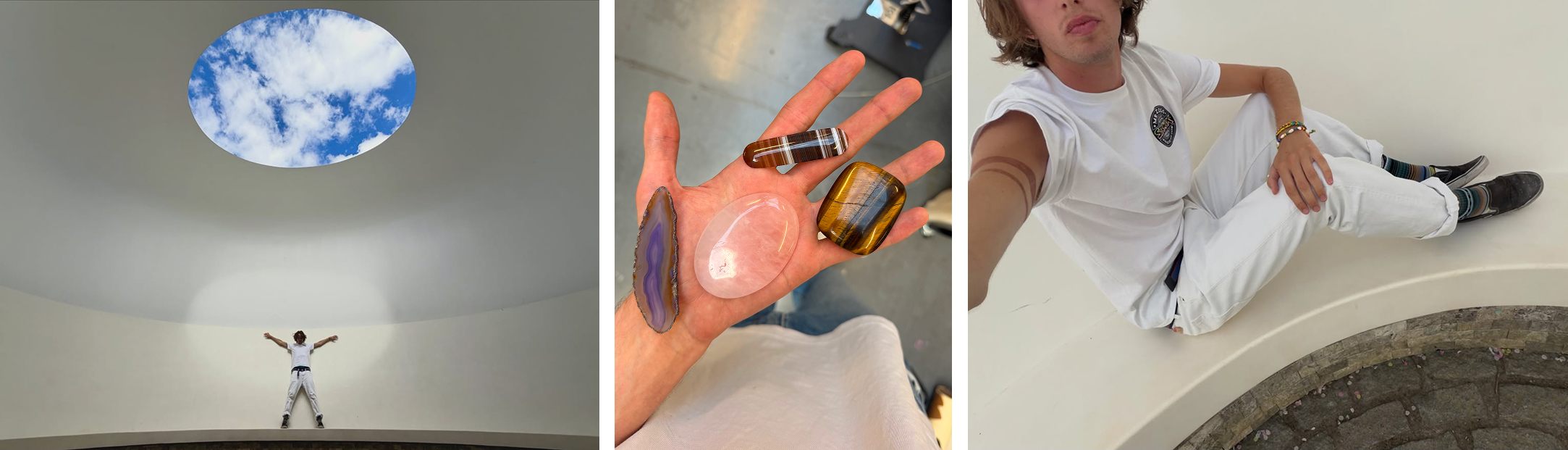
Hello! My name is Reuben Lodge and I am a 23 year old womenswear designer from Newquay, Cornwall. I recently graduated from Central Saint Martins, where I studied BA Fashion Design Womenswear. I think a huge part of my identity, both creatively and personally, comes from growing up where I have. Being from Cornwall there is an inescapable relationship you have with nature, and it comes with a specific very slow kind of lifestyle. Being constantly near a beach is a privilege I took for granted until I moved to London to study, that the first time I’d ever spent a long time away from home, I quickly realised how different city life is. I think
that’s why so much of my work calls back to home. In my collection there are lots of references to surf culture, something I have grown up surrounded by, as well as references to the work of Barbara Hepworth, an artist who dedicated so much of her life and work to Cornwall and its natural beauty.
Tell us about your graduation collection and the concept behind it.
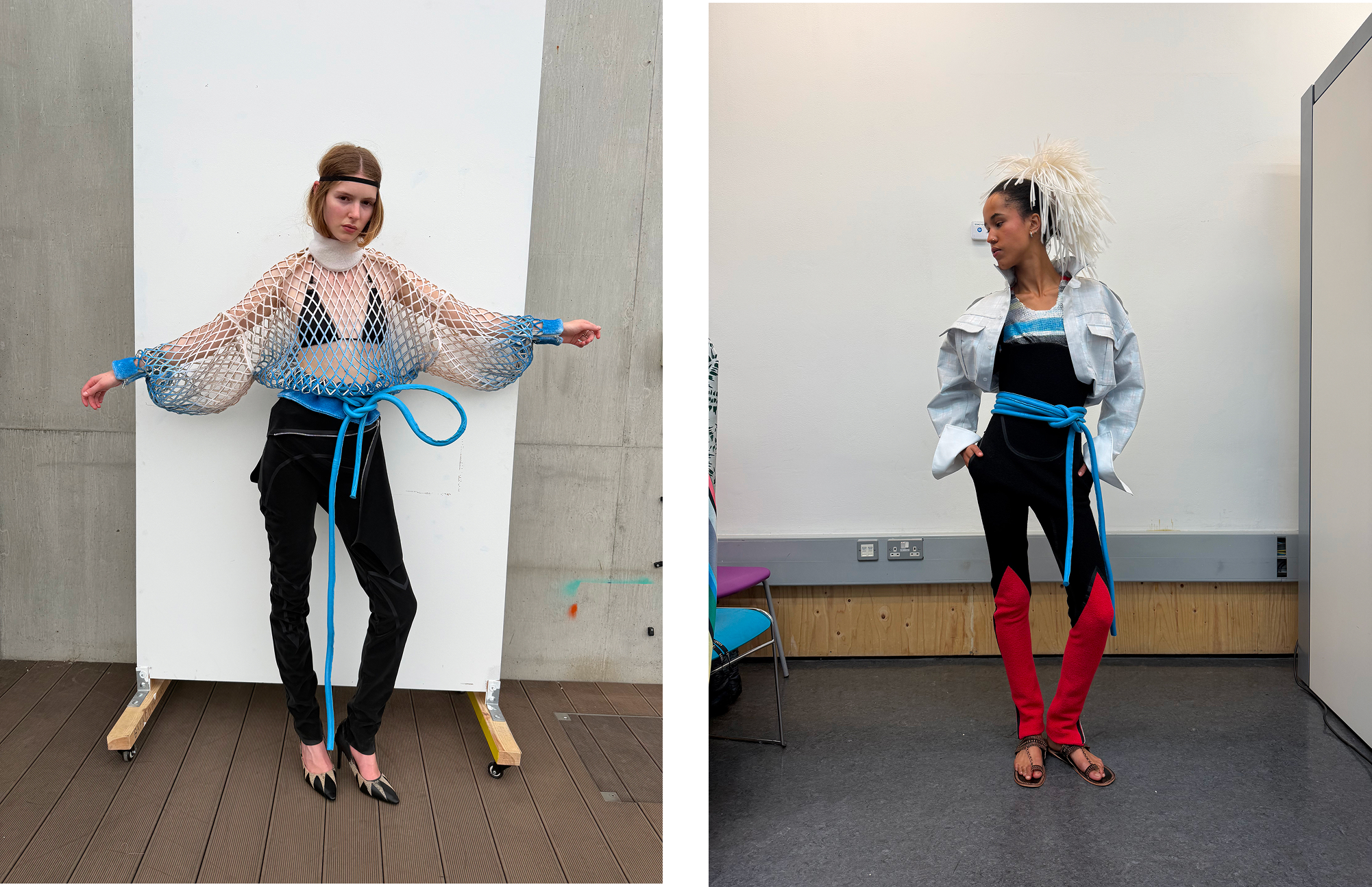
My aim for this collection was to explore the irony of how nature is commodified under the guise of morality, mindfulness, and luxury, then contrast these inauthentic representations with more lived relationships to the natural world, essentially looking at nature as commodity versus nature as connection.
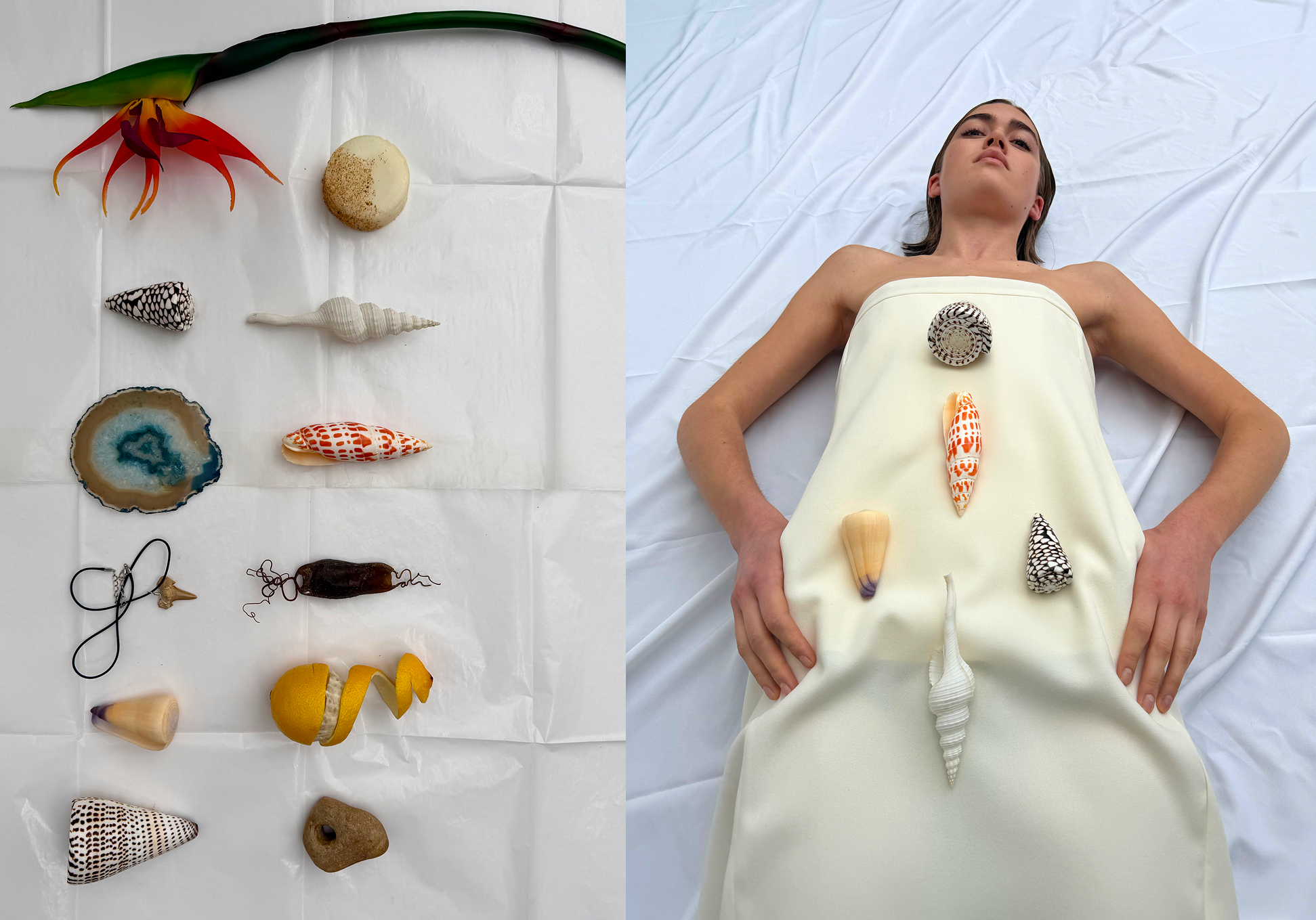
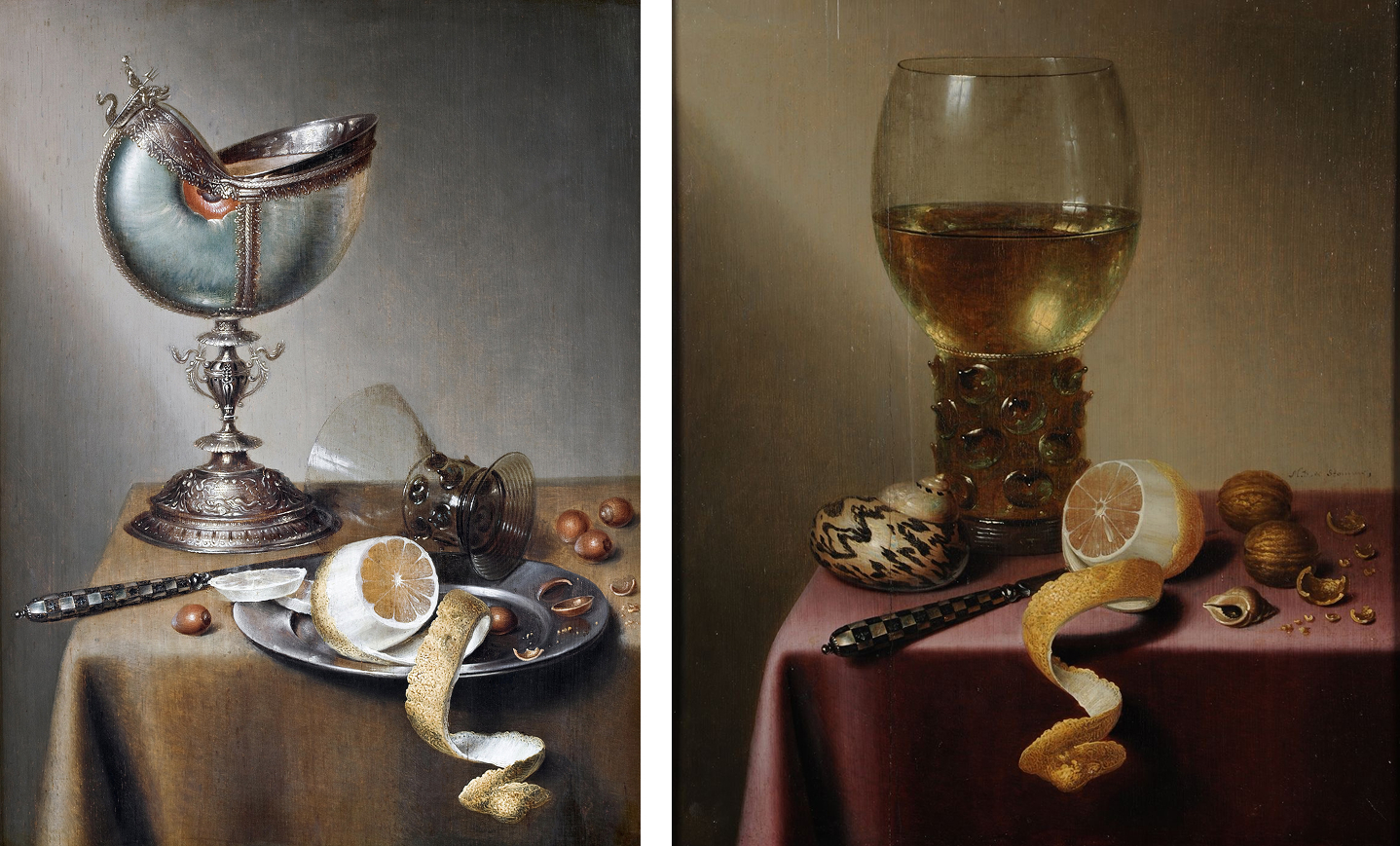
My research began by looking at natural objects that have been commodified over history, the first being symbols of 17th Century Vanitas still life, which utilised objects of desire to promote messages of anti-materialism and the ephemerality of luxury, whilst highlighting the importance of nature. I found this ironic, as these paintings actually fuelled the global trade market at the time, pushing trend cycles and creating new hot commodities of exotic objects, such as seashells and fruits.
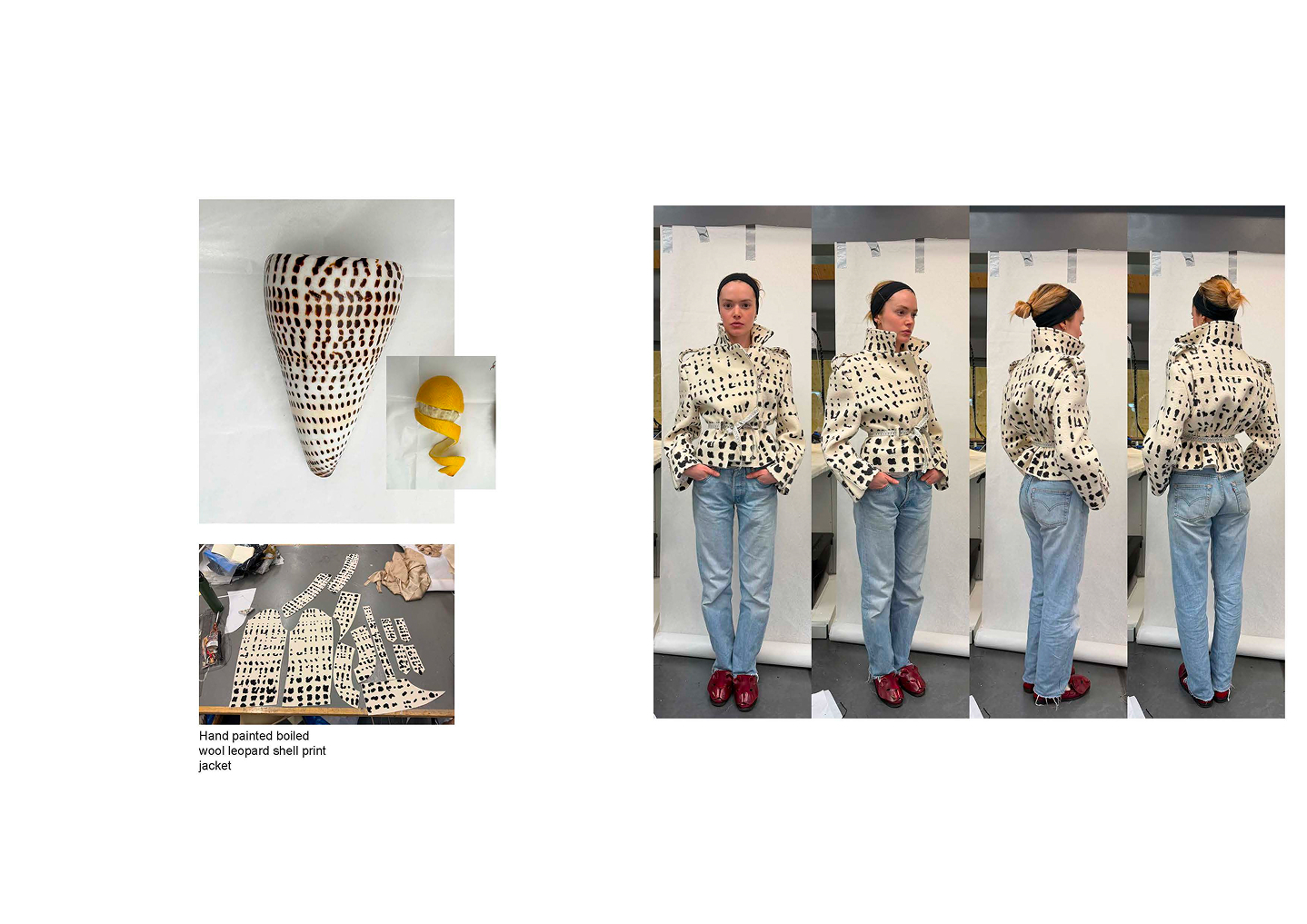
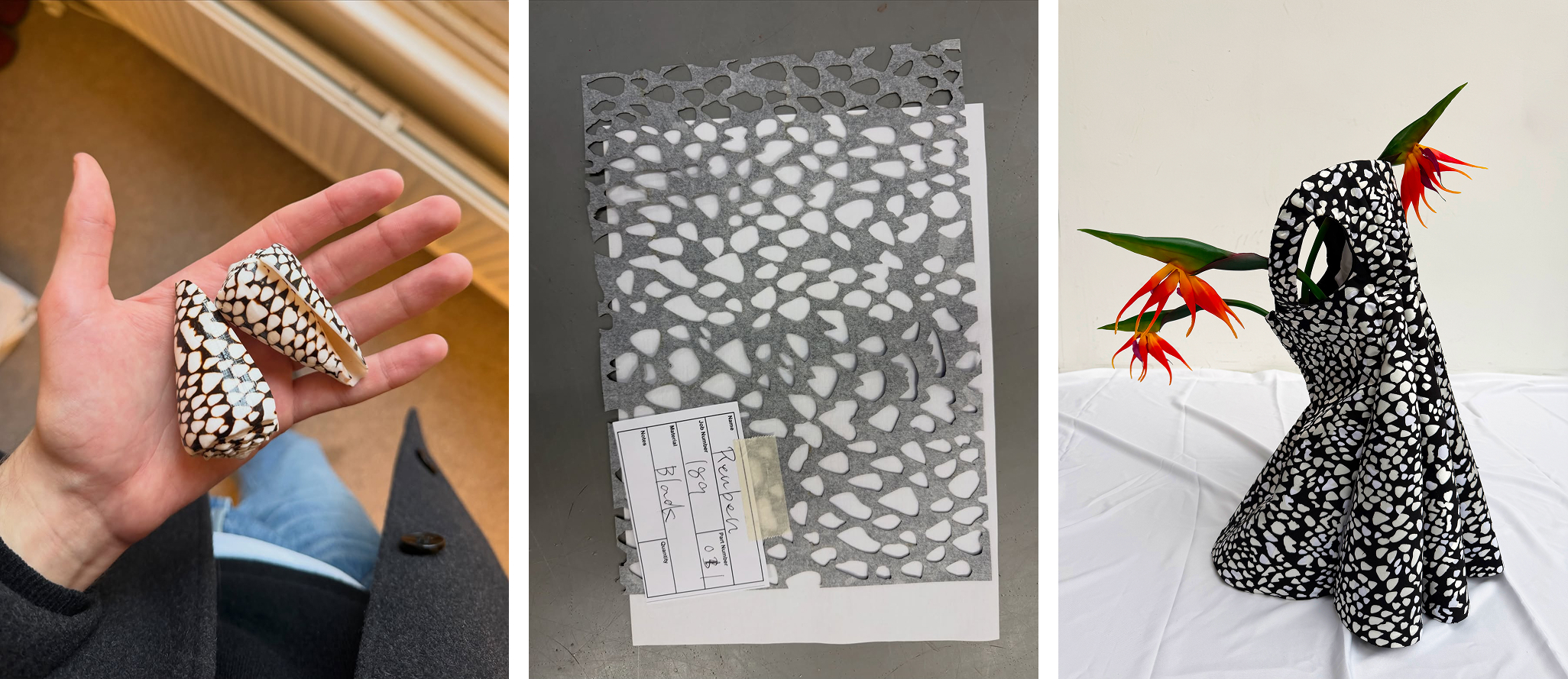
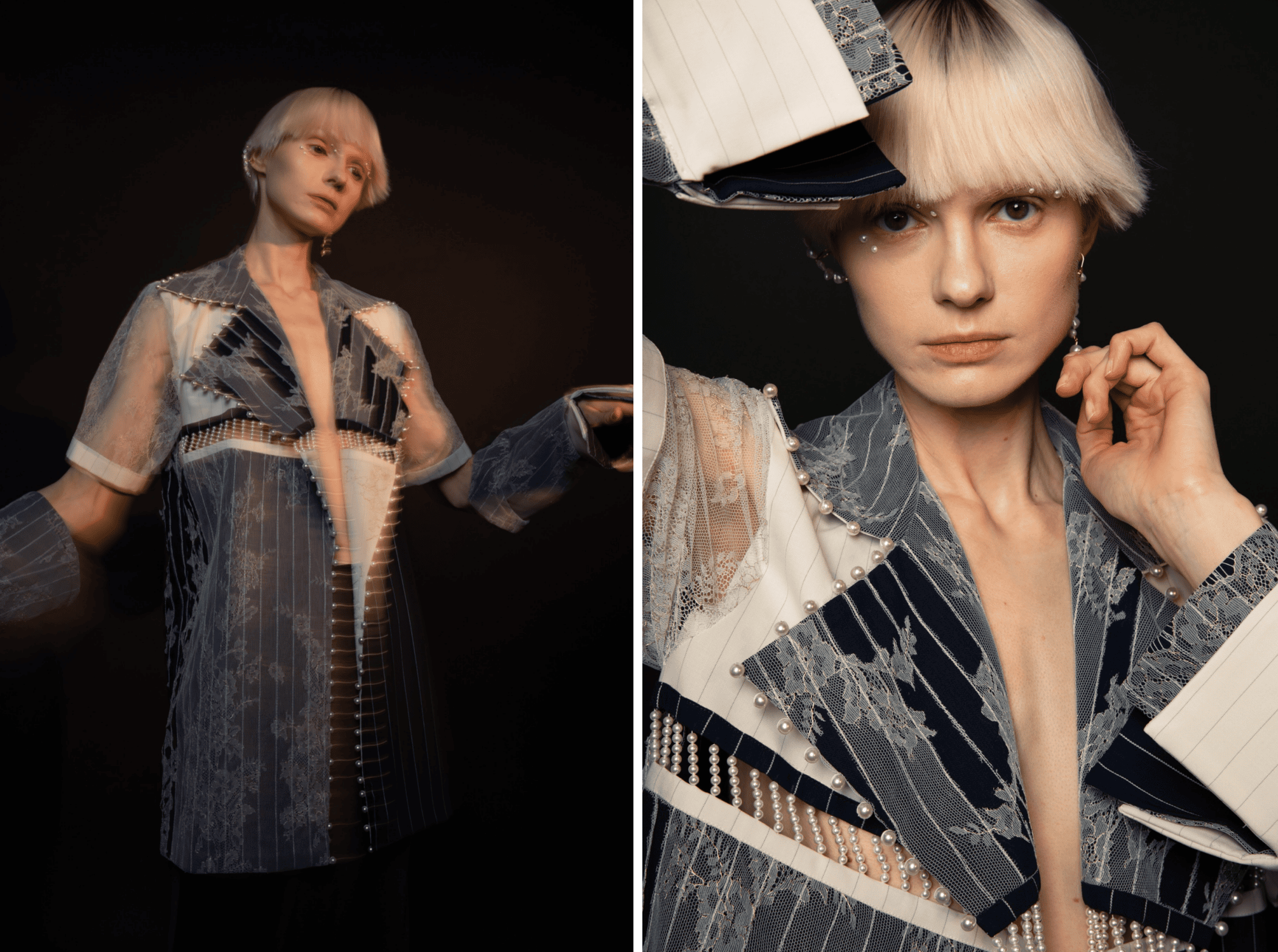
Laser-cut cotton and silk satin are fused into three layers, creating a shell-inspired print and a rigid sculptural form
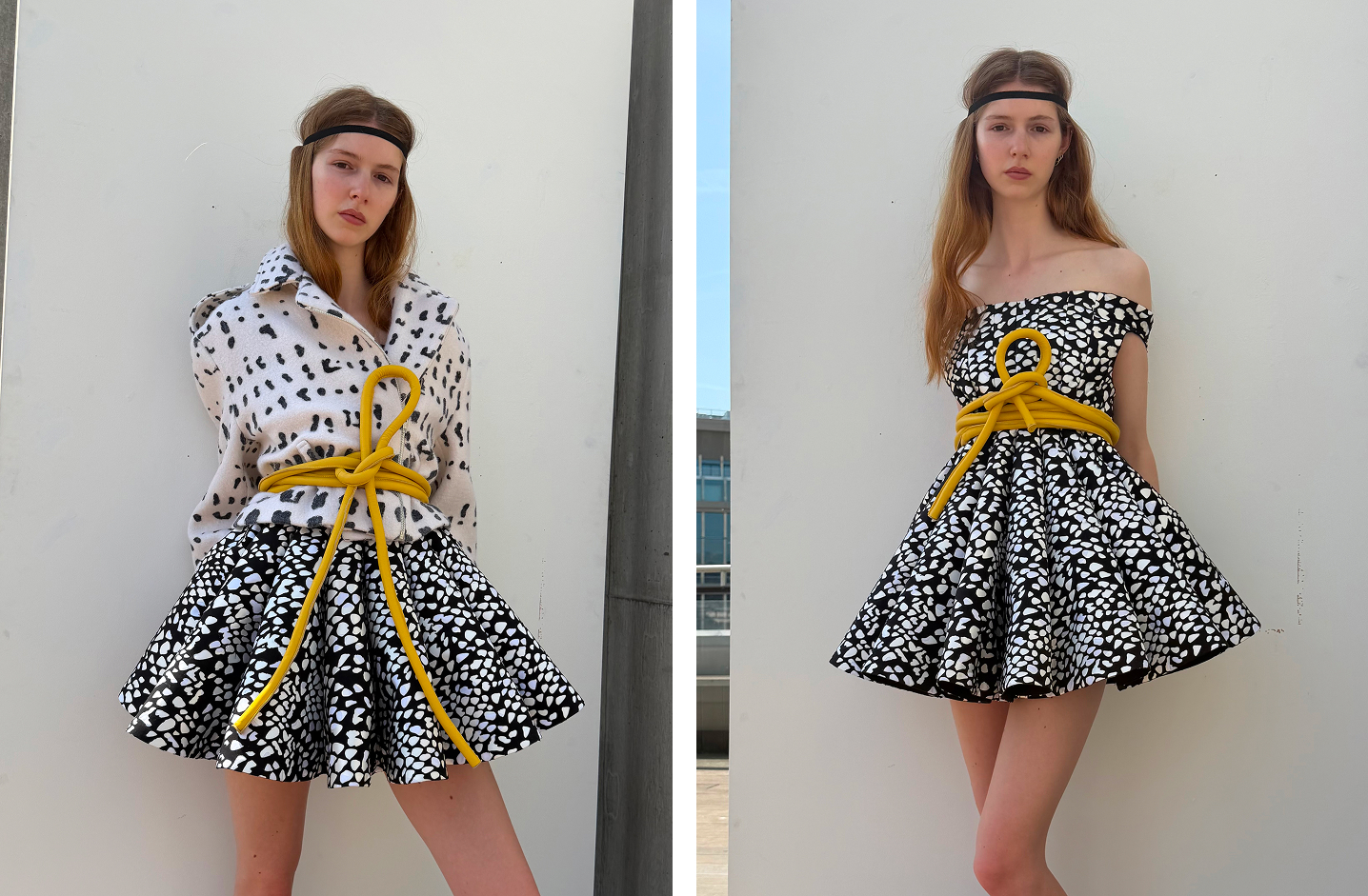
Whilst expanding my research I found this mirrored contemporary resort and wellness culture, which became the unifying visual aesthetic for my work, creating a beachy, summery resort collection but through an ironic lens. Luxury retreats claim to offer spiritual reconnection and natural purity, yet often commodify nature through exclusivity, over-consumption, and environmental damage, in the same way the paintings did. Both use nature as an aesthetic and symbolic tool, masking materialism beneath a facade of mindfulness.
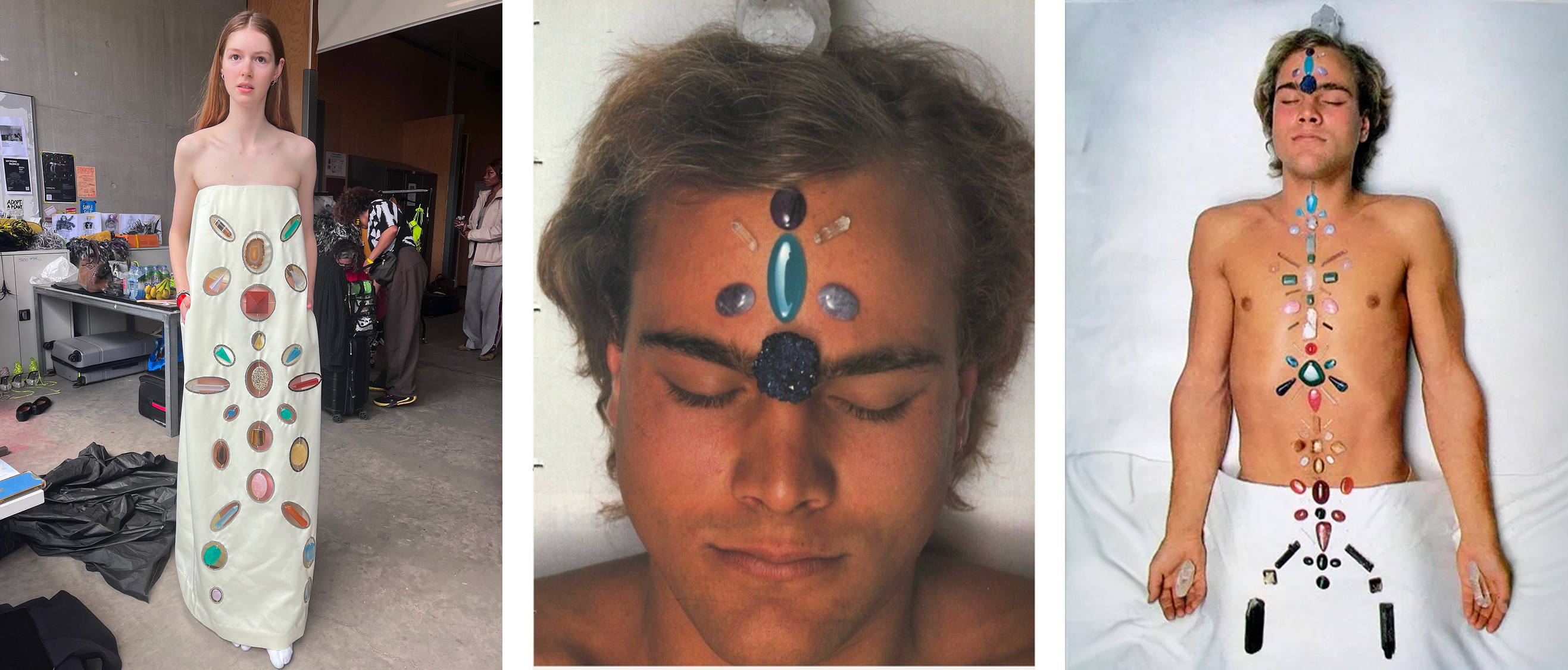
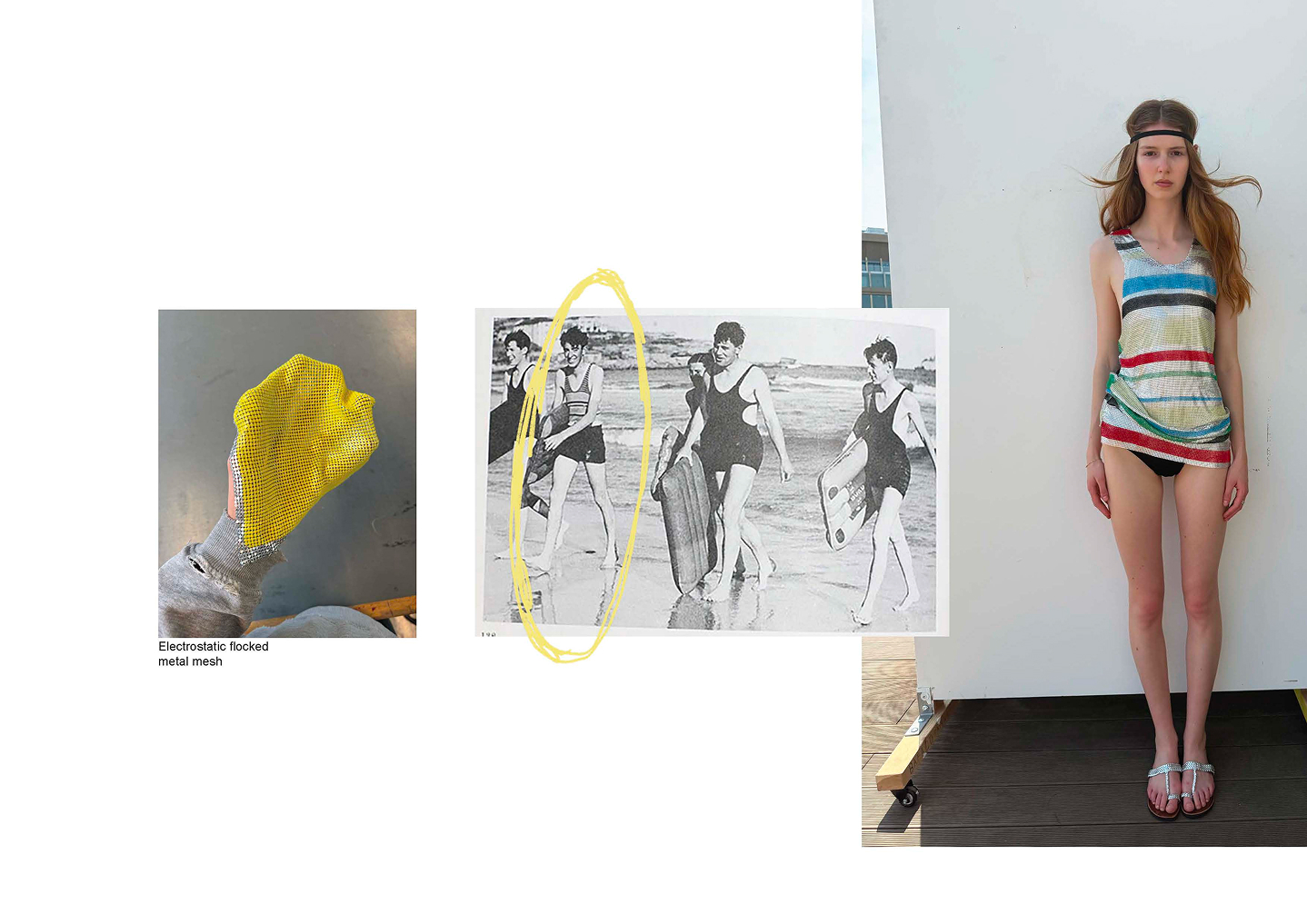
To counter these inauthentic relationships with nature, I wanted to explore contrasts, in this case Barbara Hepworth and surf culture. Unlike the often artificial and curated ‘natural experience’ of wellness culture, surfing embodies the most authentic, harmonious and respectful relationship to the natural world, relying on one’s connection with their environment.
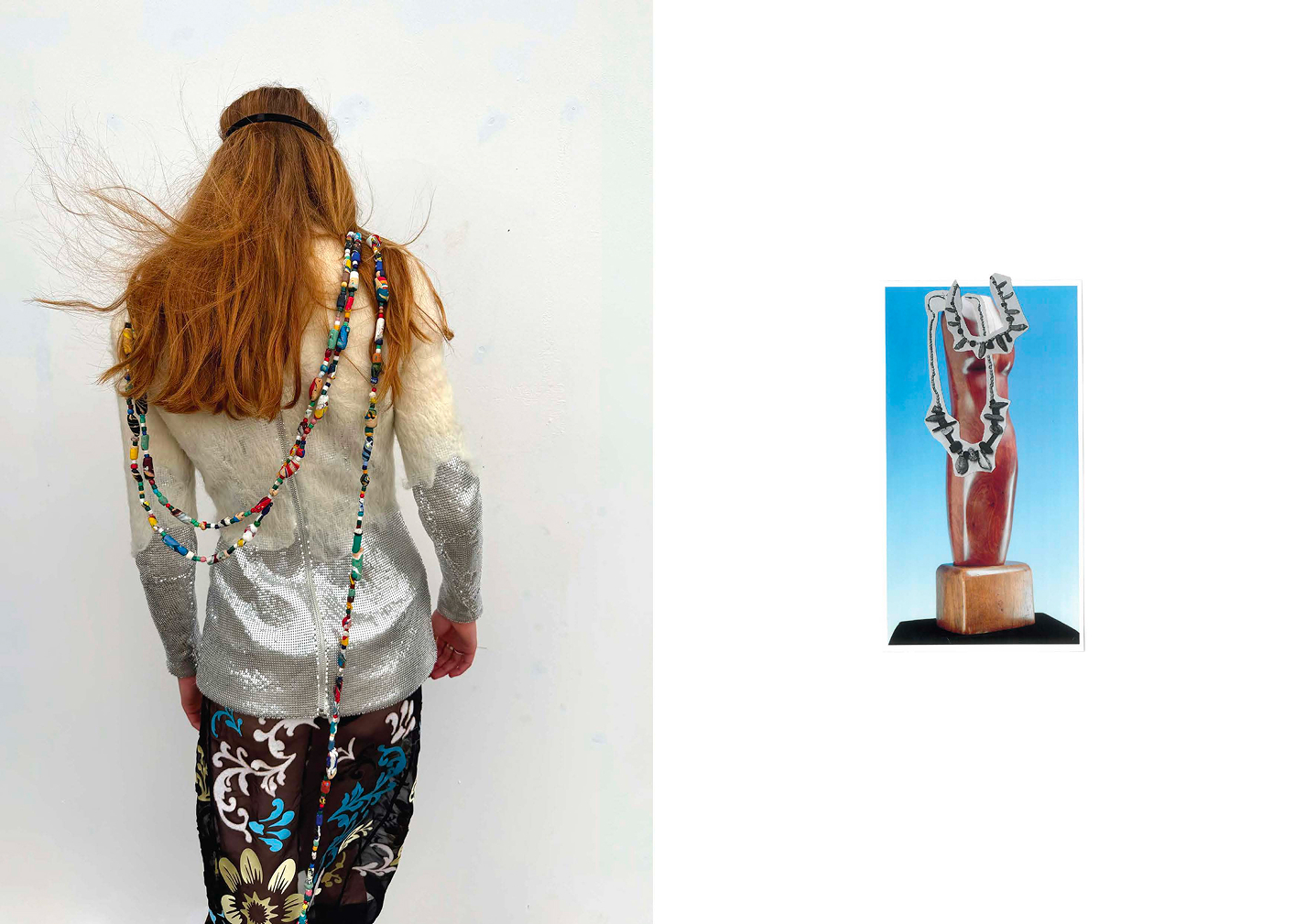
When I think about Barbara Hepworth’s work and how it makes me feel, it is the deep-rooted respect and admiration for nature, never trying to outshine her surroundings, but instead work in harmony with them like a surfer, that attracts me to it. I find the overall impact of her work to be the antithesis of the 17th century vanitas, it is wholly authentic. The sculpture’s purity and simplicity move me and is what I aim to carry into my work and practice.
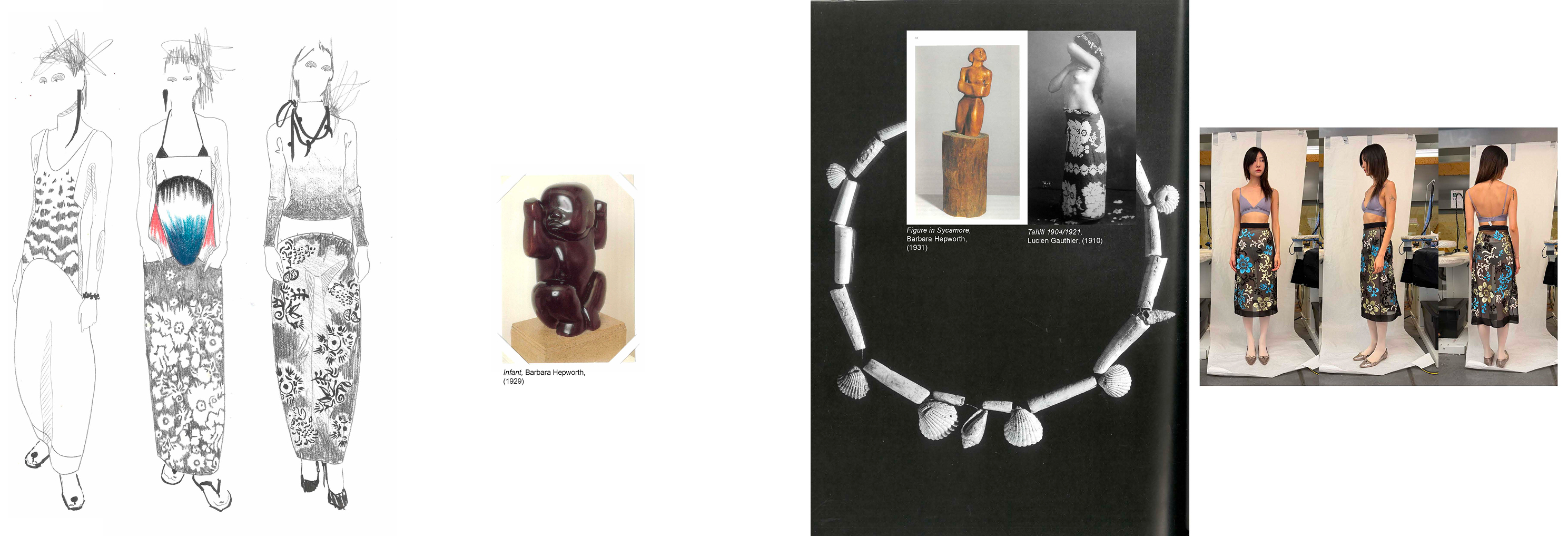
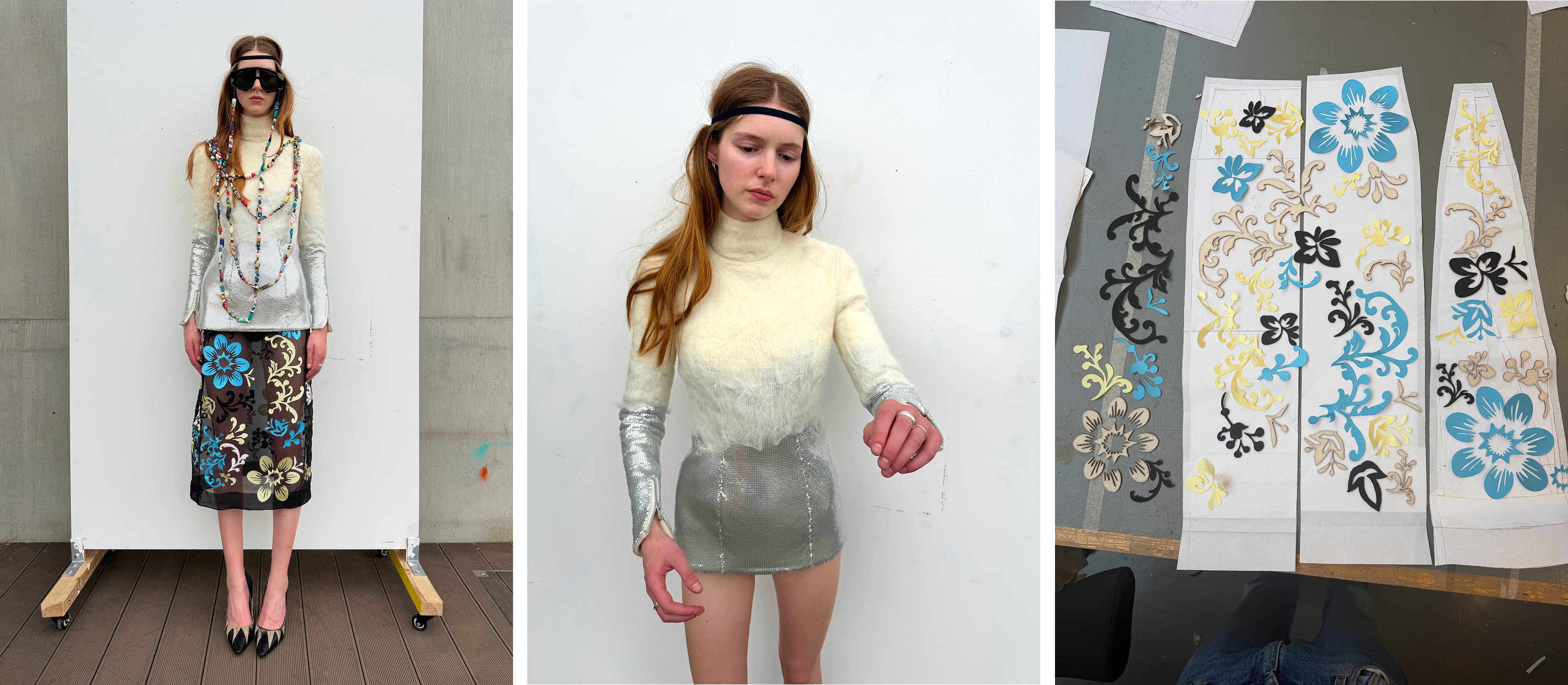
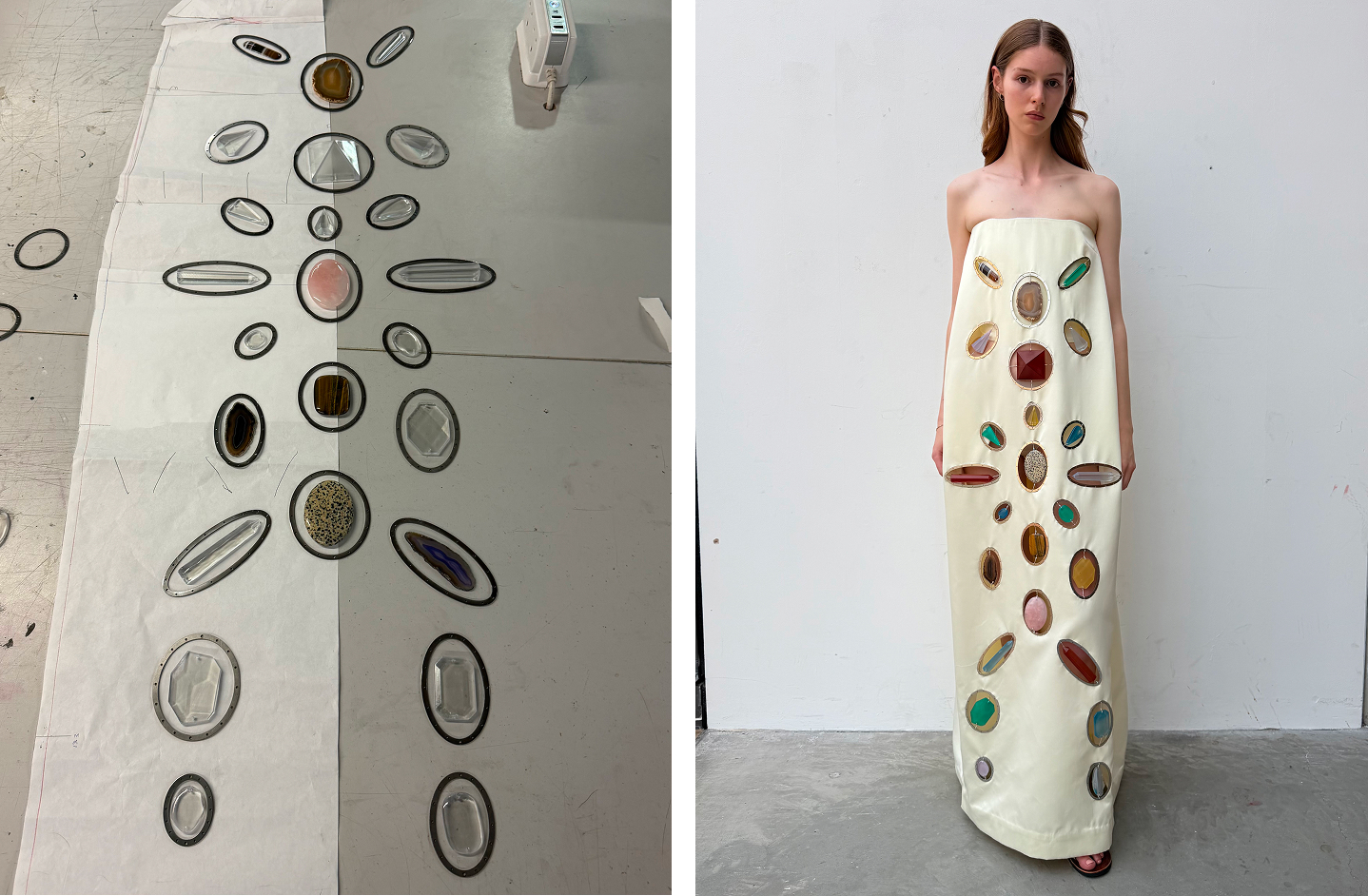
Hepworth cites her main inspirations to be predominantly from seashells, waves, and crystals which interestingly I found each represent an element of the other main references I myself am drawn to, with waves = surfing, seashells = still life, crystals = wellness culture.
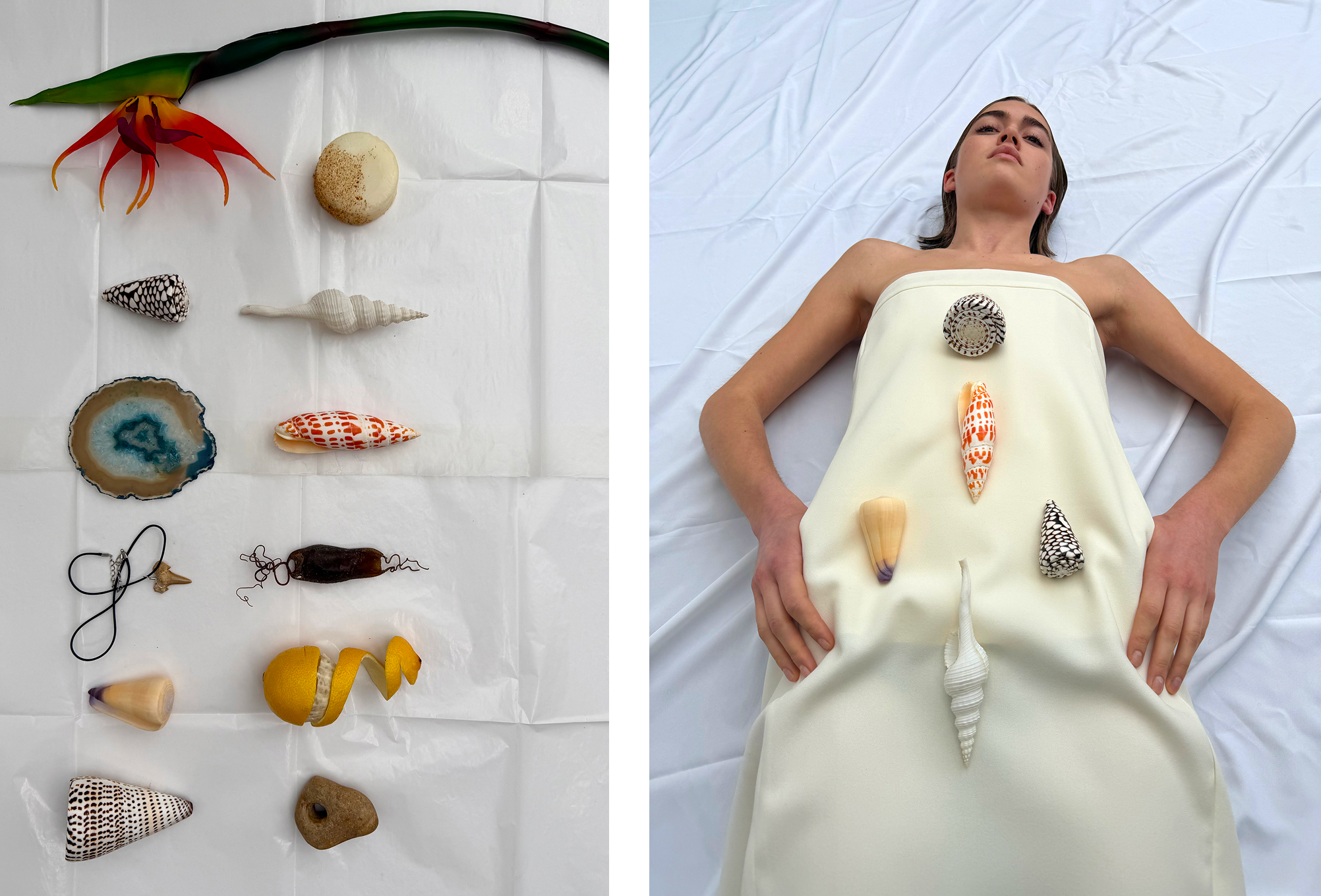
I want to use these objects as a way to sew this narrative together, ultimately acting as a question of not just how nature looks, but how it is valued.
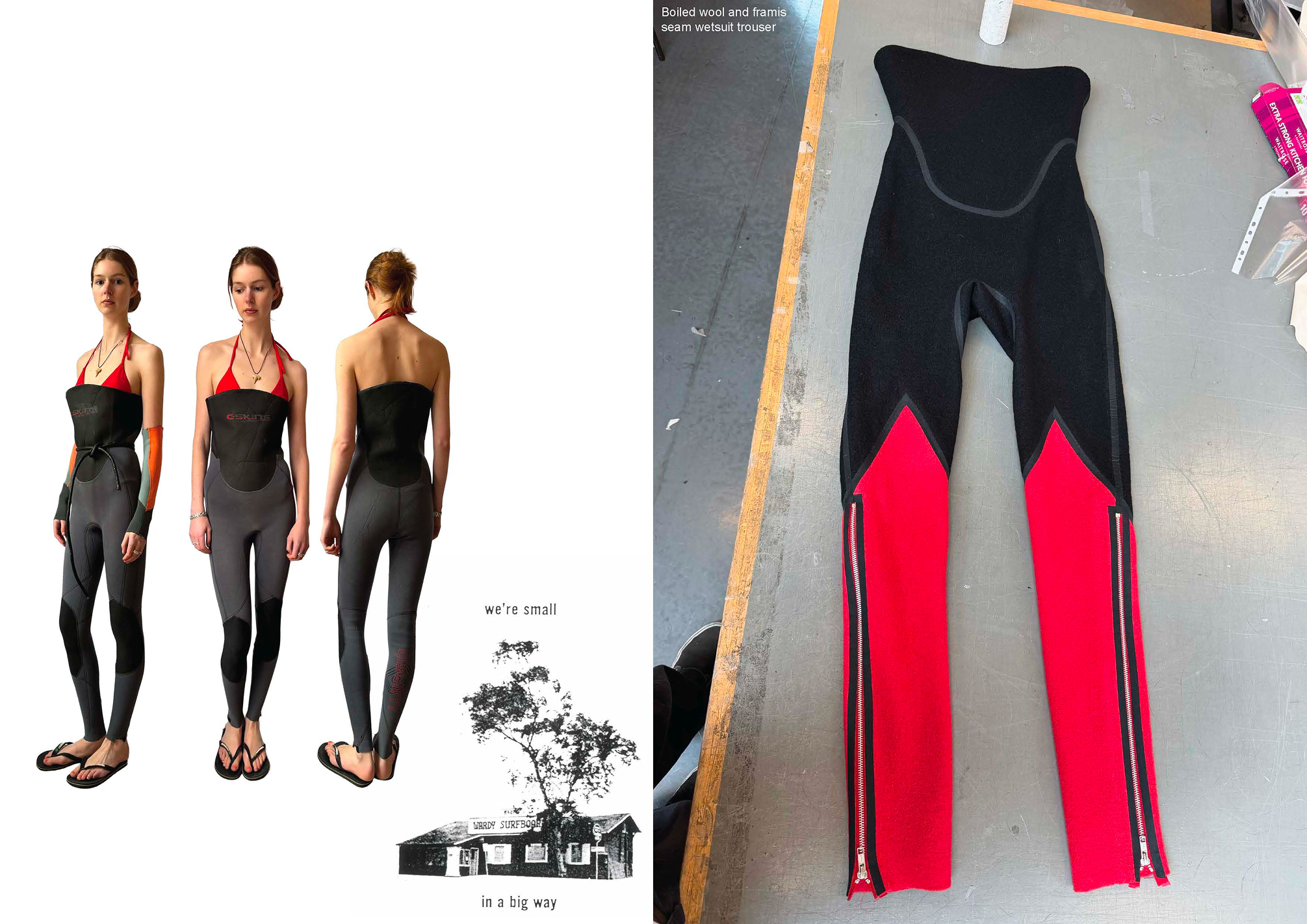
I noticed that you have worked at Celine and Givenchy. How have these experiences influenced your design philosophy and approach to your work?
I would say I have been hugely influenced by both the places I have worked. I feel extremely lucky and grateful to have had the opportunity to learn and and grow as a young designer in two powerhouse brands. I think when you are an intern everything is so new and exciting, at least that was how I felt, it’s hard to not become totally engrossed and emotionally attached to the collections you are working on. You end up dedicating so much of your time and life to the collection, as all designers do when working in the industry, but for me this was the first time I had experienced that, having previously only worked on university projects that last 3-4 weeks and result in one garment outcome. Waking up every day and going to work on the same collection for months on end is inevitably going to shape your brain as a young designer, I feel very blessed to have had my creativity shaped by Givenchy and Celine and all the many incredibly talented designers who I got to learn from during my time there.
What are the main influences that shape your work and creative process?
I have always been influenced by artists, so going to museums and exhibitions is a huge part of my creative process. As I mentioned, Barabara Hepworth is one of my favourite artists of all time, and I think that stems from the memories I have as a child frequently visiting her studio museum in St Ives. Another very influential moment for me was visiting the Rijksmuseum as a young teenager and falling in love with all the Dutch Golden Age Still Life paintings on display. Both these experiences years later still influence how I create and what I am inspired by, and undoubtedly shaped my collection
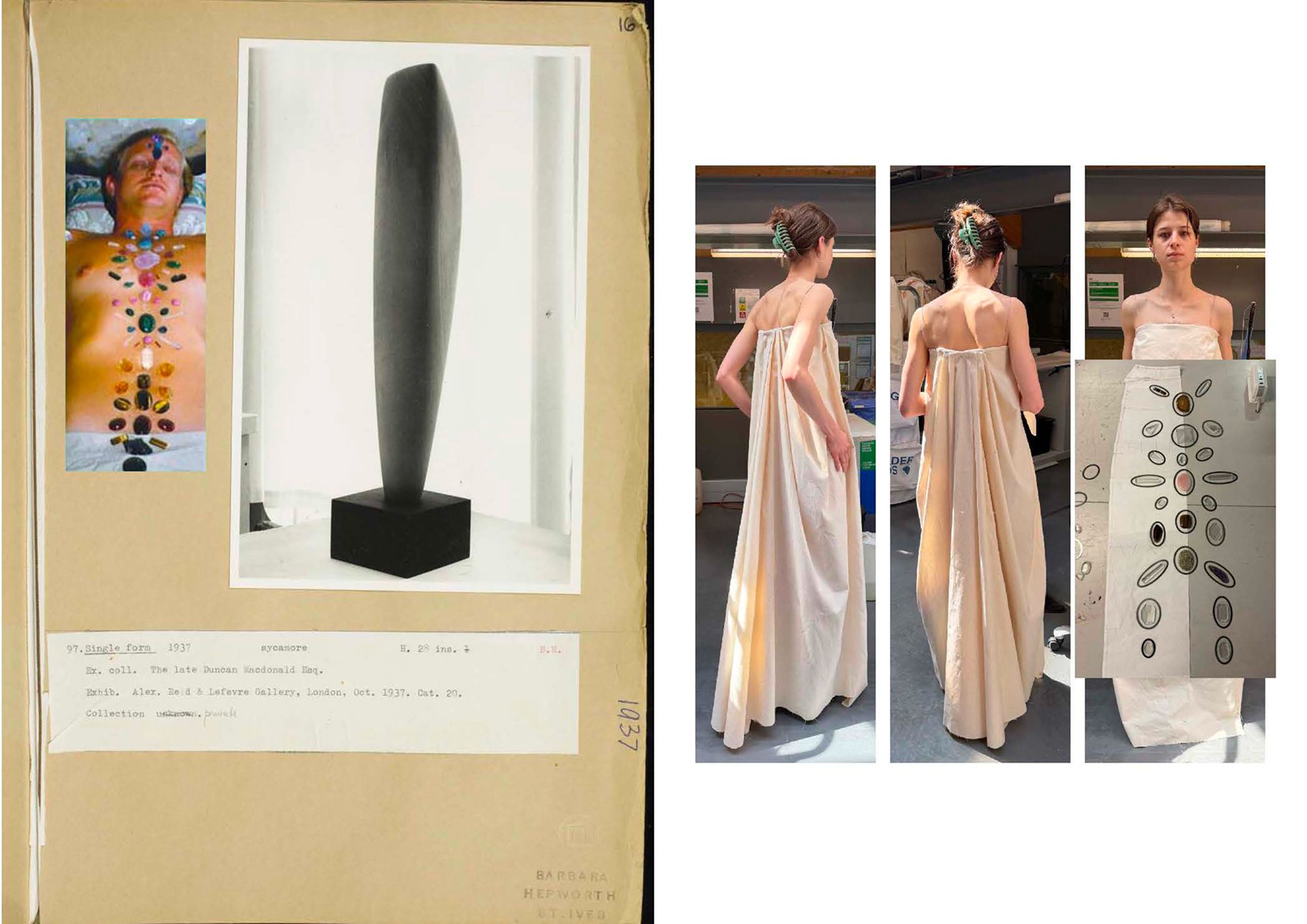
The contrast between the softness of the organza dress and the structure of the details creates a unique balance. Could you tell us more about this contrast?
The design process for the Nautilus dress started with the textile development, which involved laser cutting and bonding a material to a sheer organza to create a kind of faux devoré effect. It took lots of trials and experimenting with different fabrics to bond to the organza before landing on boiled wool, which I found gave the perfect amount of textural contrast whilst adhering well to the organza. The print comes from the nautilus shell, which is a very popular icon in Dutch 17th Century still life and acts as a good symbol to represent the message of my collection.
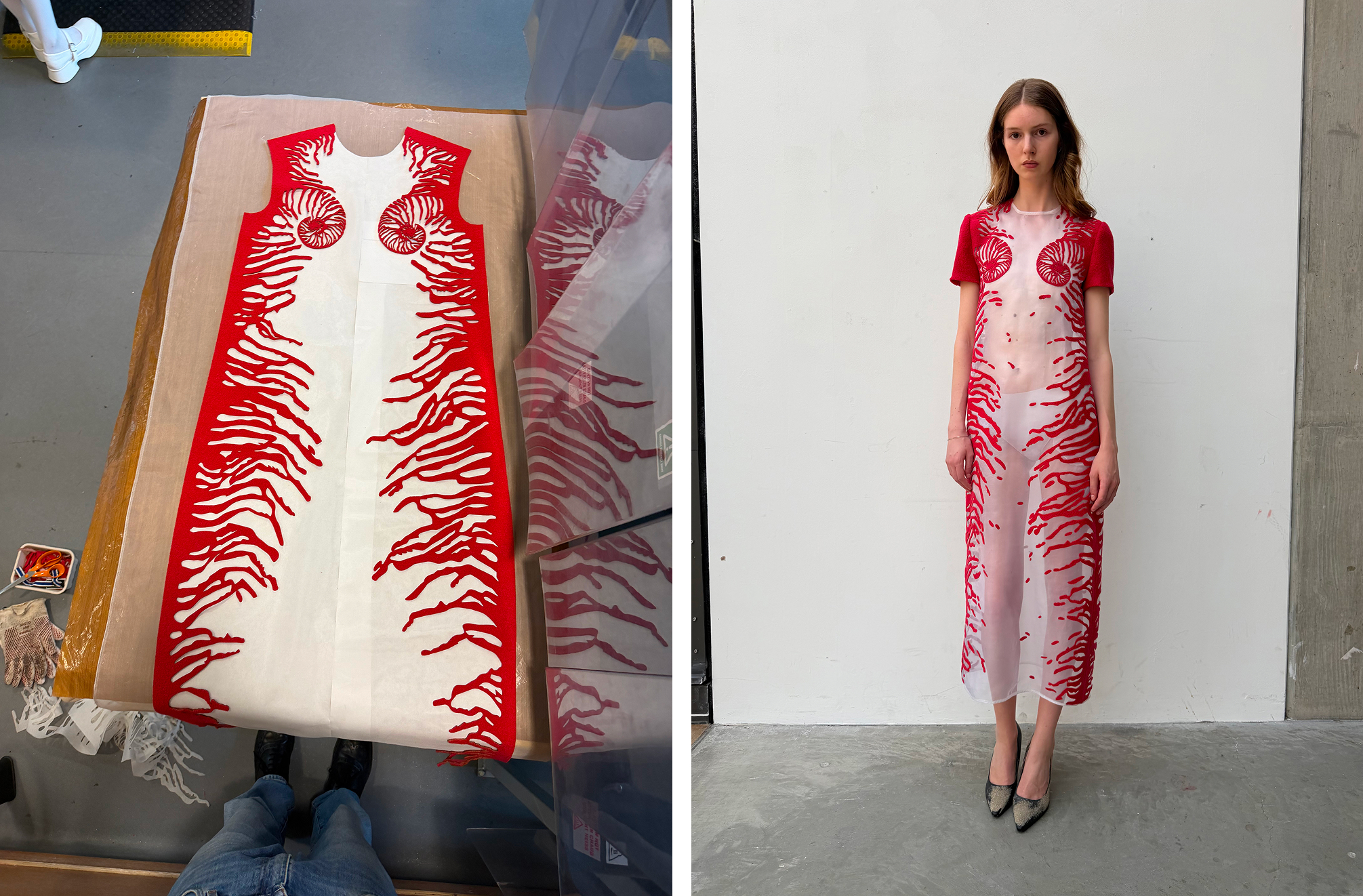
I was instantly attracted to the organic stripes and its spiral, so decided to have the motif start as a spiral on the bust placement and then curl out and go down either side of the garment, this placement was also tactical, as it meant I could hide the pocket bags behind the print and also mask the shoulder and side seams within the wool.