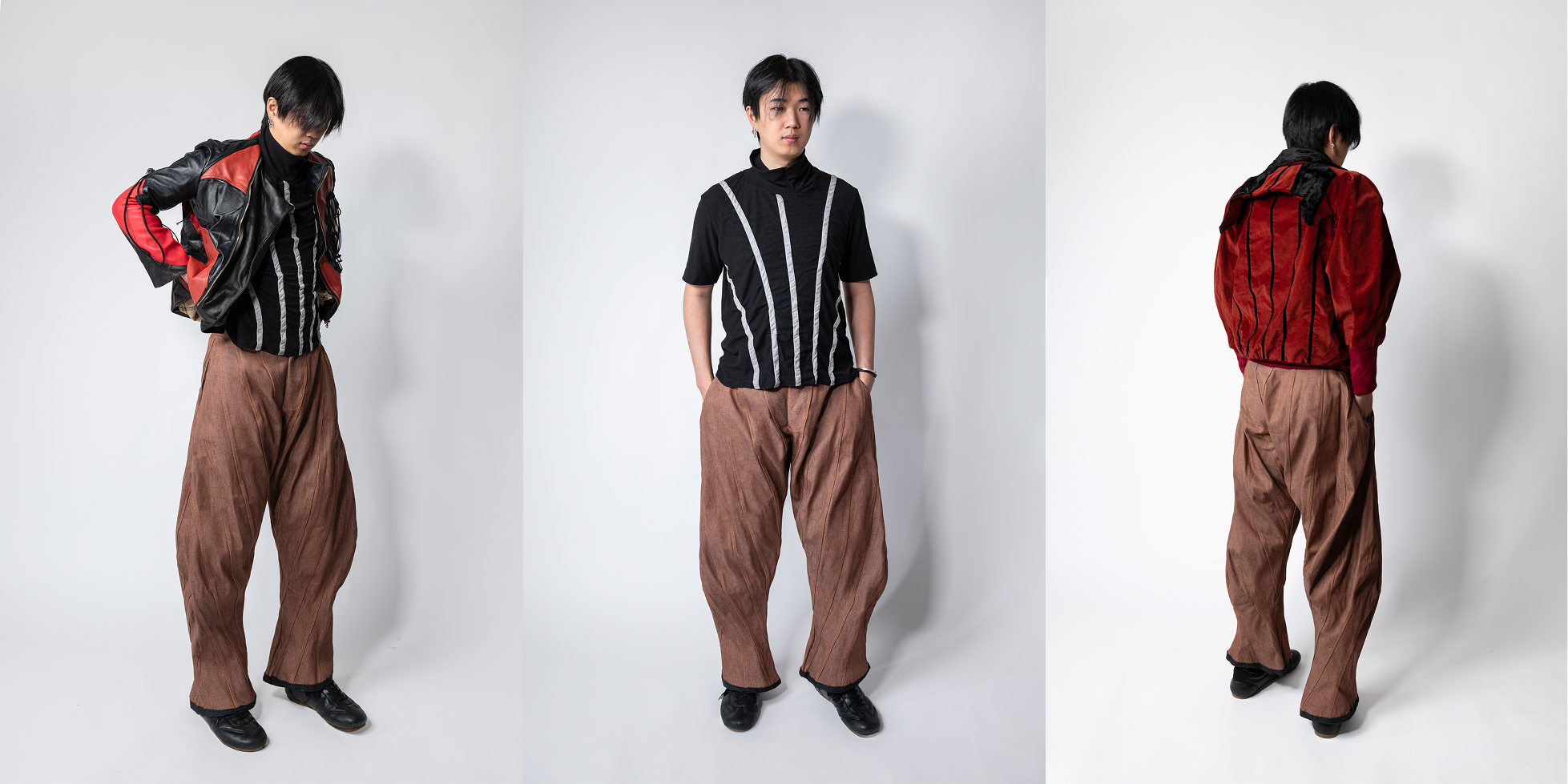
The 2024 Fall/Winter ready to wear collection by Hanwei Cheng integrates Art Nouveau principles with contemporary fashion design, combining modern silhouettes and materials with the stylised line and structural dynamism of Art Nouveau architecture, illustration, and object design. Cheng merges structure and ornament within contemporary menswear, drawing on the Art Nouveau principle of Gesamtkunstwerk (“total work of art”).
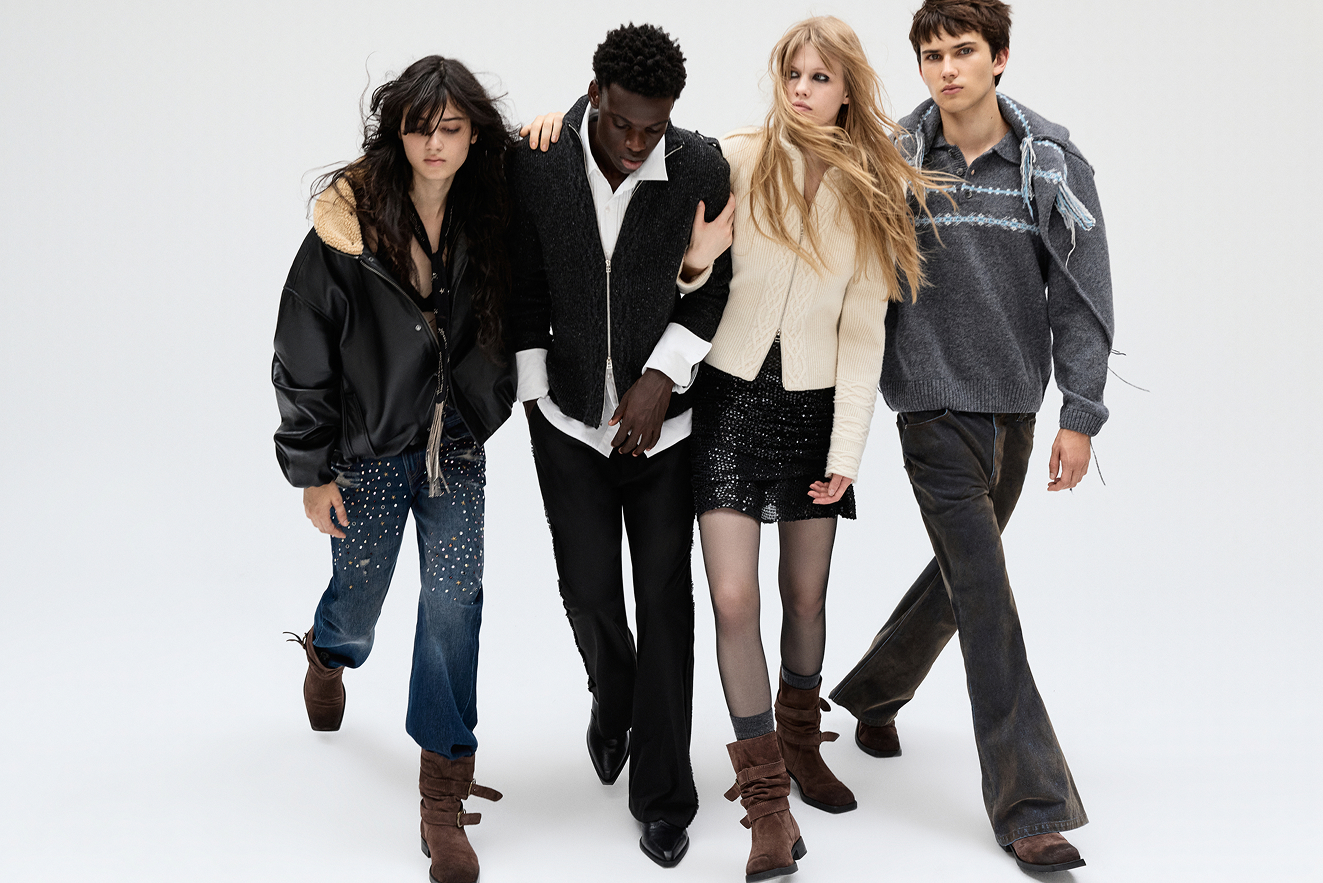
In their 2024 Spring/Summer ready to wear collection, modern designer Isabel Marant was inspired by Art Nouveau and focused on lightness and femininity, conveyed through material, line and print. In this collection the Art Nouveau influence is implied through the aura of the garments. In contrast, Cheng embeds bold architectural and design details within the construction of the garments themselves, with a focus on structure rather than decoration. His interpretation translates the movement and flow into structural elements, resulting in garments which appear light and billowy, while being architecturally grounded.
Cheng’s collection consists of six garments to be worn interchangeably, producing a range of silhouettes, from tailored and refined to relaxed and streetwear-oriented, replicating the polarity present in historical Art Nouveau fashion between the floaty silhouettes of women’s dress reform and the structured tailoring of menswear. Cheng has adopted a restrained palette of reds, browns, black, and white, reducing the soft earth and bright jewel tones commonly associated with the movement into a more contemporary, minimalist, visual language suited to a modern fall collection.
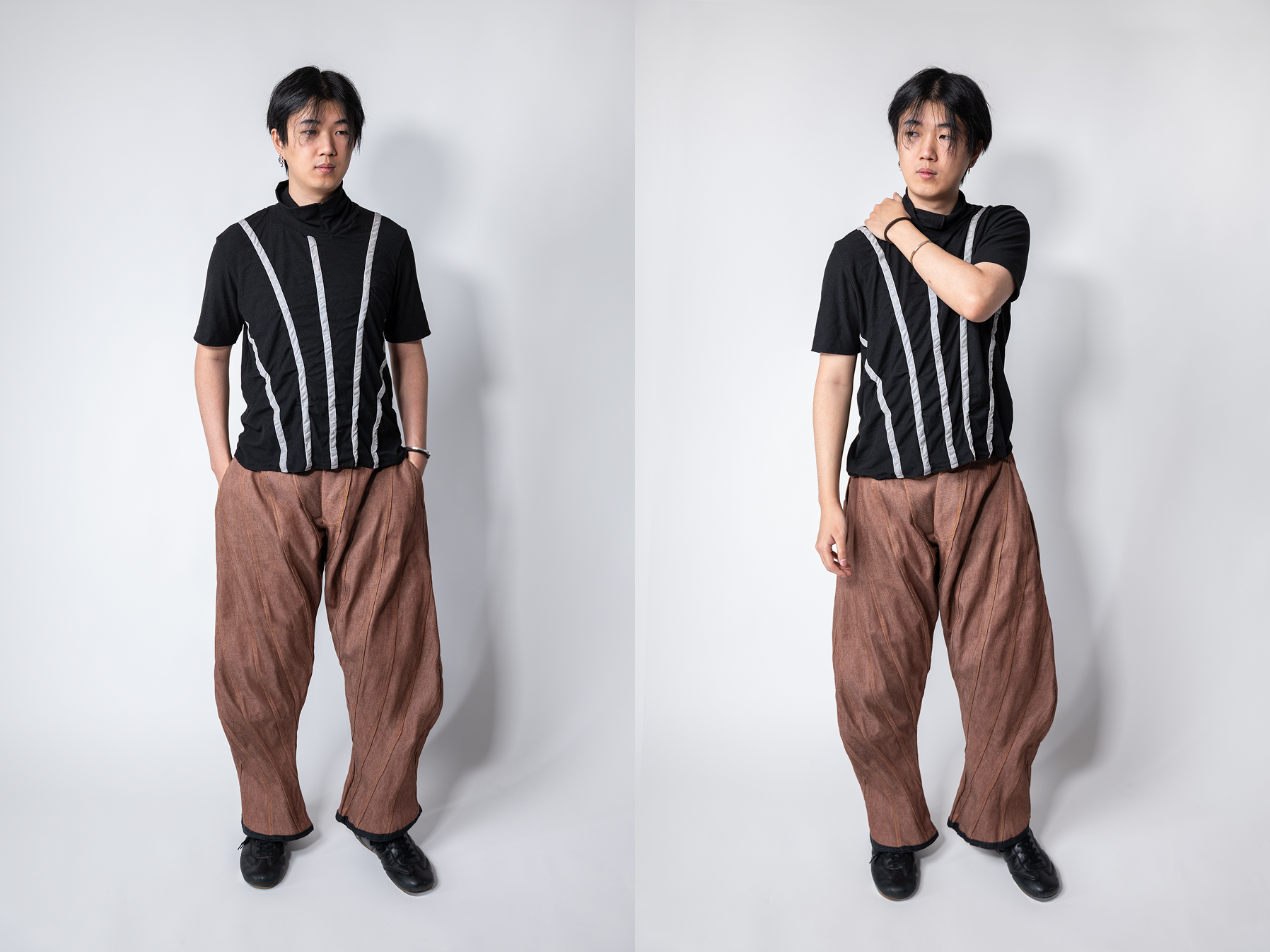
The first pair of trousers is the most successful element in demonstrating the collection’s relationship between structure and movement. They are constructed from brown denim and utilise twisting panels that spiral from the waistband to the ankle, creating a ballooned silhouette that tapers at the hem. The trousers contain elements of the modern balloon trouser and 1910s harem pant, or Elizabethan trunk hose, with incorporated elements of Art Nouveau design. Flat-felled seams connect the panels and function like corset stays, supporting the fabric while allowing individual sections to fold and undulate as the wearer moves, adding a modern feel to the historically based shape. This creates a silhouette reminiscent of the twisting in Art Nouveau vases and botanical motifs.
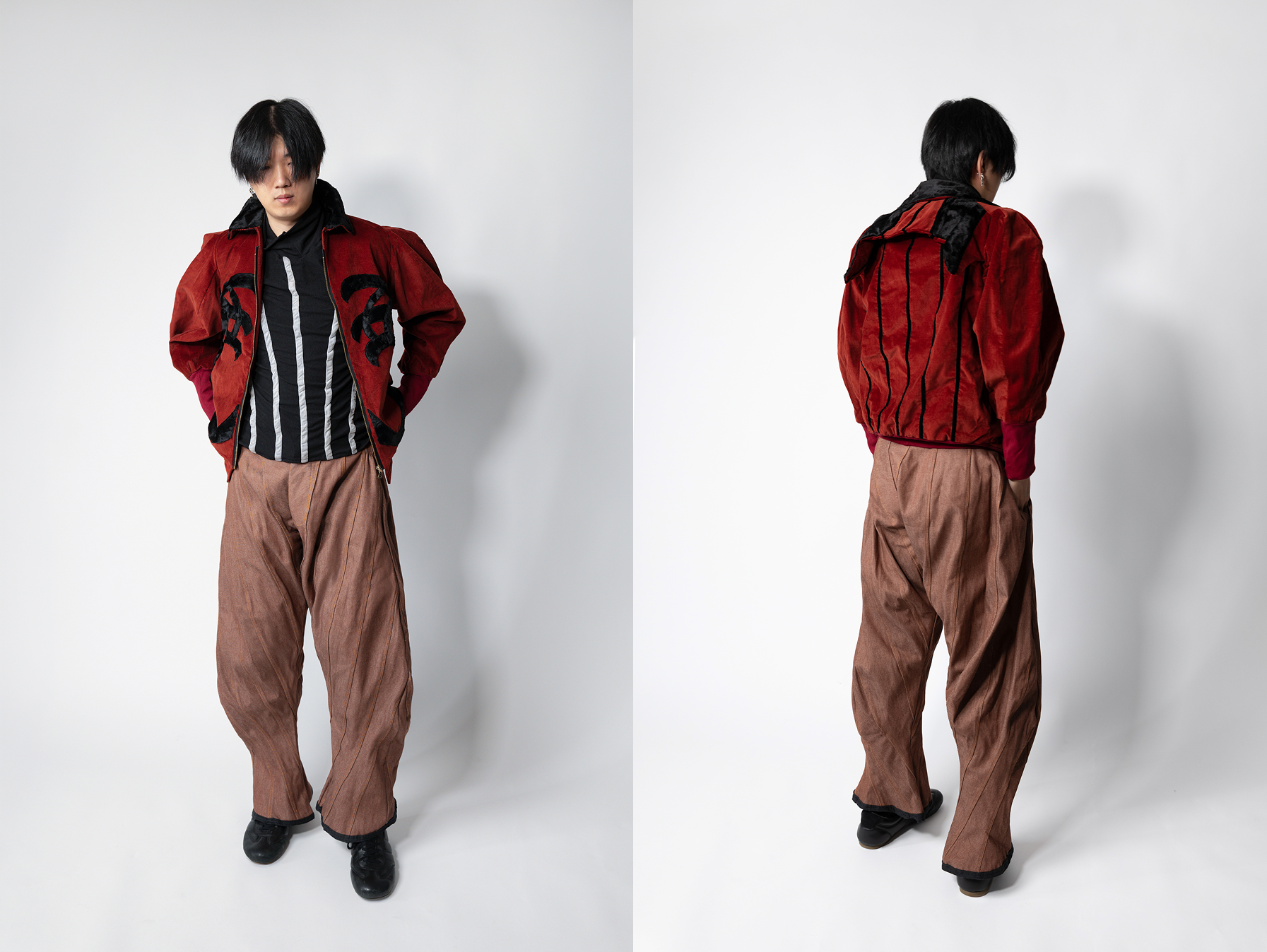
This relationship between structural and flowing elements continues with a reimagining of the classic bomber jacket. The jacket is constructed from red corduroy with black velvet embellishment, with exaggerated balloon sleeves which taper into elongated cuffs. Across the front, black velvet detailing forms a classic “whiplash” motif, bringing movement to the otherwise stiff form. On the reverse, velvet tape creates linear divisions inspired by wrought iron architectural detailing and stained-glass leading. Cheng creates an effective contrast between the boxy body of the classic style and linework, and the ballooning sleeves and decoration reminiscent of Art Nouveau glassware. The choice of the bomber jacket is particularly poignant as the Art Nouveau period was effectively ended by the outbreak of World War One, during which the bomber jacket was designed. This garment seems to answer the question, what would have happened to fashion had Art Nouveau continued through the outbreak of the war.
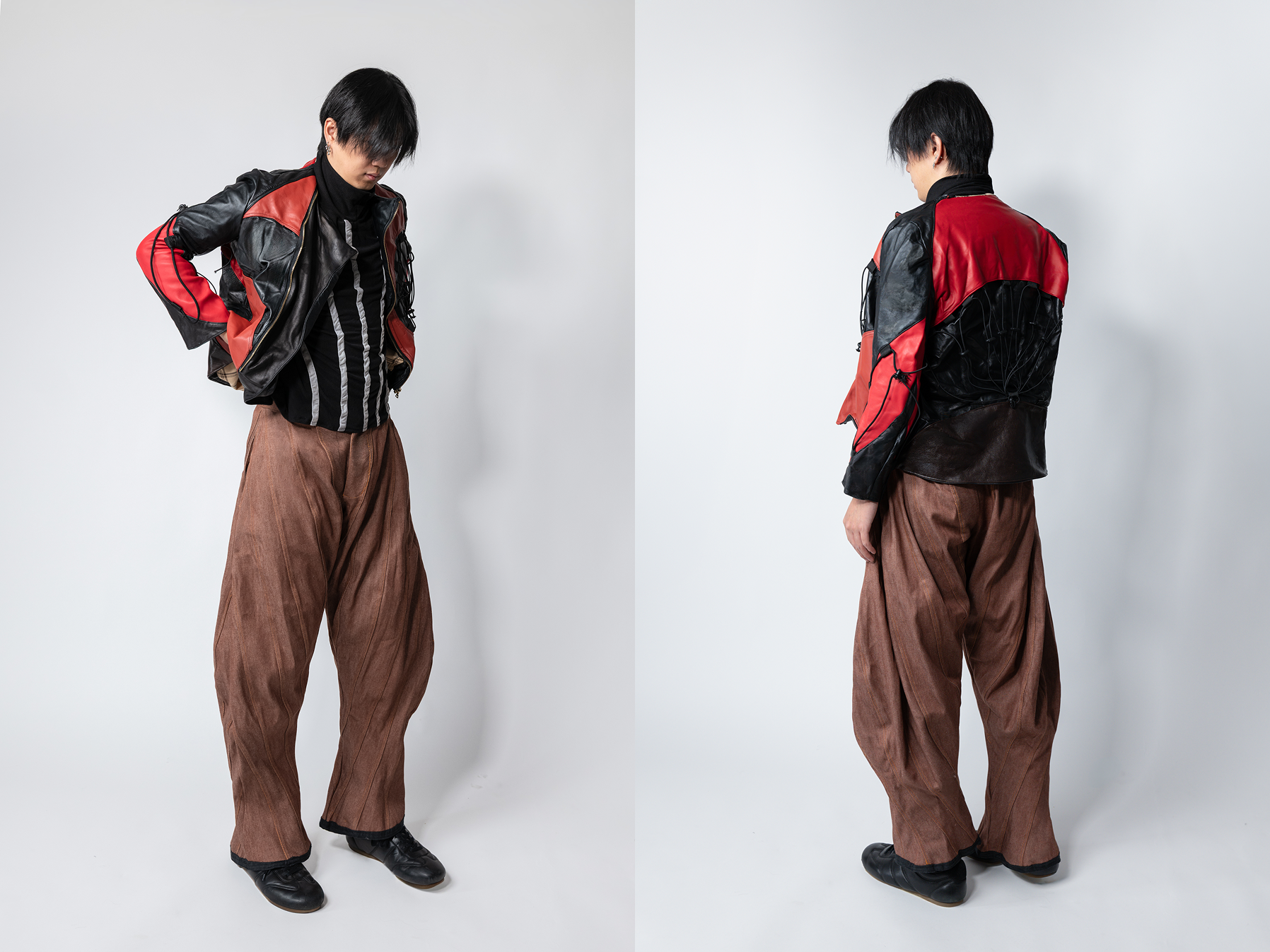
The second jacket takes inspiration from the modern biker jacket, utilising asymmetry in its function and decoration. It retains the classic asymmetrical zip and fitted silhouette of the style, while exaggerating the asymmetry between the front panels, reflecting the irregular compositions found in Art Nouveau design. The more fitted silhouette of this jacket contrasts with the fluid elements employed in the rest of the collection, particularly the ballooned sleeves and trousers. Here, the Art Nouveau influence is concentrated in exaggeration and decorative elements, while the jacket's silhouette remains close to the modern biker jacket.
The collection can be compared to the Alexander McQueen Pre-Fall 2020 womenswear collection, which draws inspiration from Art Nouveau fashion. McQueen’s collection employs sharp tailoring, drapery, pronounced waist definition, and floral motifs, which directly reference turn-of-the-century womenswear. Cheng’s collection moves beyond direct historical imitation by drawing on the movement’s wider visual culture. He translates architectural ironwork, stained-glass construction, and the flowing forms of Art Nouveau interiors into contemporary garment construction and silhouette. While both collections explore movement, tailoring, and stylisation, Cheng’s work adopts a more abstract and architectural interpretation of Art Nouveau, using implication of form and structural line instead of overt decorative references.